

7 Best Books About Romans to Equip Christian Parents
Want to Share the Gospel? Start by Understanding Romans.
You tuck your little one in, and they ask a big question: “What does it mean to be good?” You know the answer is tangled up in God's grace, a truth beautifully laid out in the Book of Romans. But turning Paul's theology into words a child can hold onto can feel like a lot.
That's normal. Romans is the 6th book of the New Testament, Paul's longest letter, and it contains 16 chapters, with about 9,447 words and 433 verses in common English Bible counts, which helps explain why so many Christians treat it as a foundational book for doctrine and discipleship (Bible Charts facts about Romans). It was traditionally written by Paul in Corinth around AD 55 to 57 during his third missionary journey, so you're not opening a lightweight devotional text. You're opening one of the richest letters in Scripture.
The good news is that you don't need to master every debate before you can lead your family well. You need a trustworthy guide that helps you understand the gospel more clearly for yourself. These books about Romans can do exactly that. Some are warm and readable. Some are better for deeper study. Some are built for group discussion. All of them can help you grow into the kind of parent who answers big questions with confidence, gentleness, and joy.
1. Romans For You (2-volume set) by Timothy Keller
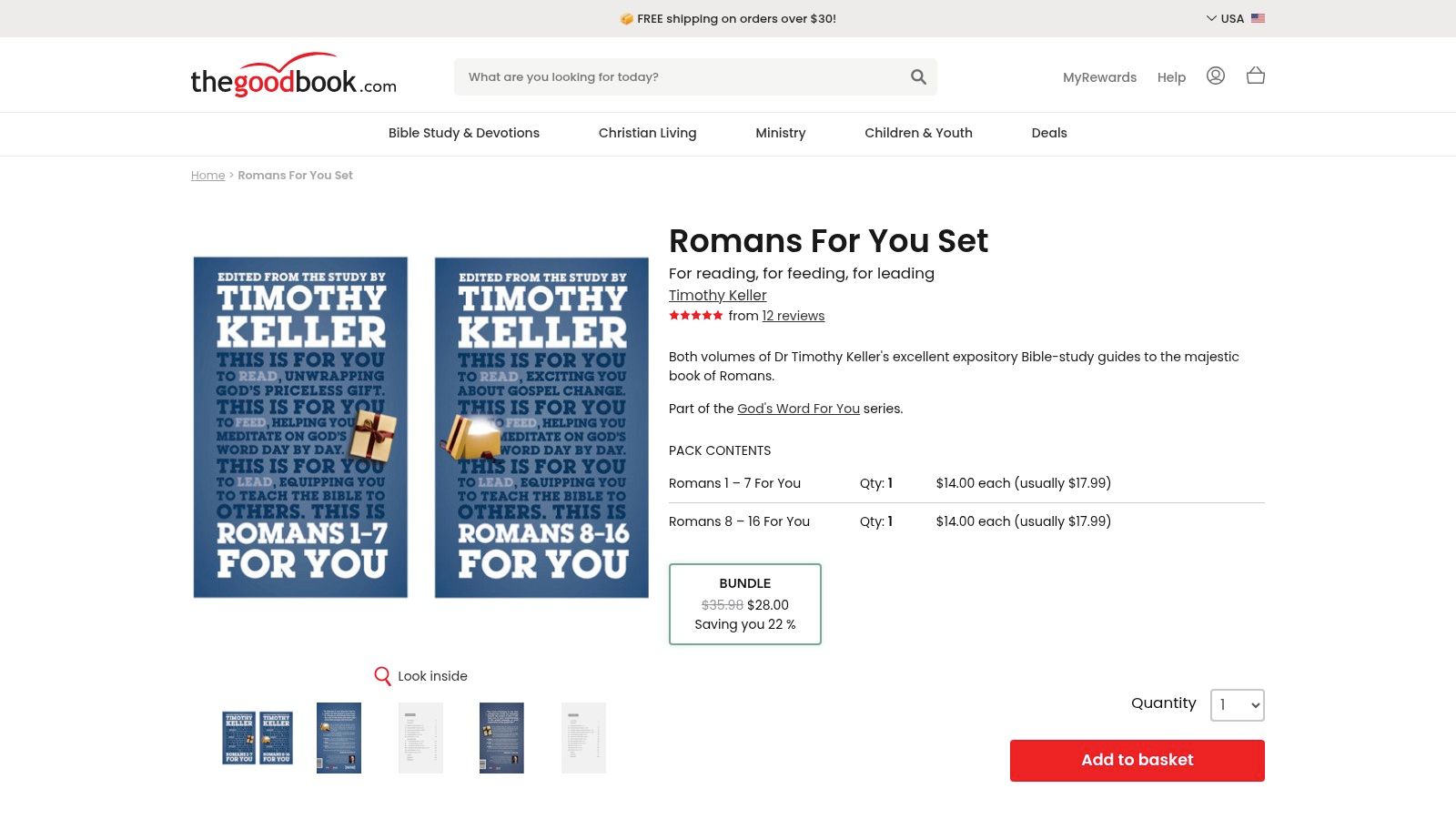
If you want the easiest strong recommendation on this list, start here. Romans For You from The Good Book Company is the set I'd hand to a tired parent who wants real depth without reading like they're back in seminary.
Keller's two-volume format helps right away. One book walks through Romans 1 to 7, and the second covers Romans 8 to 16. That split matters because Romans can feel dense, and shorter chunks make it easier to keep reading after bedtime, during nap time, or over a few mornings with coffee.
Why it works for parents
Keller writes with a pastor's voice. He explains Paul clearly, then presses truth into everyday life. That makes this set especially useful if you're trying to connect Romans to the kinds of questions your kids will eventually ask, like why people sin, why Jesus had to die, and how grace changes the way we live at home.
- Best use: Personal study that turns into family discipleship conversations.
- Big strength: Clear gospel emphasis without becoming shallow.
- Watch out for: It's not the book for heavy original-language work or detailed academic debates.
If you like discussing what you're learning with your spouse or a small group, Keller's setup also works well for that. The “Read, Feed, Lead” style gives you room to read for yourself, reflect devotionally, and teach from what you're learning.
Practical rule: If you've been avoiding books about Romans because they feel intimidating, choose the one you'll actually finish. This set is one of the safest bets.
It also pairs well with other home discipleship habits. If you're building a wider shelf for this season, this guide to Christian parenting books for gospel-centered homes is a helpful next stop.
2. Romans for Everyone (Part 1 and Part 2) by N. T. Wright
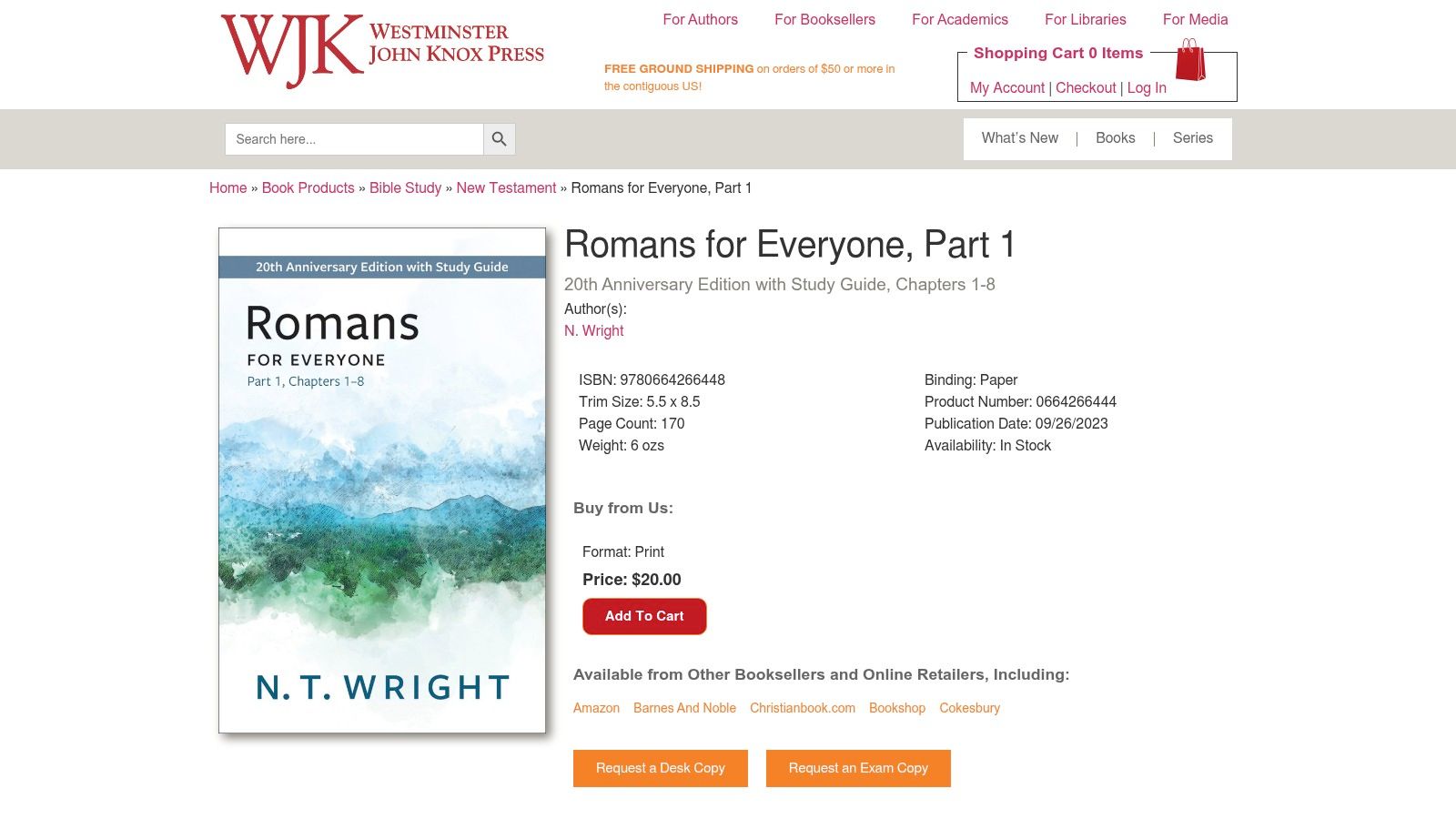
Some parents don't need a warmer version of Romans. They need a clearer map. That's where Romans for Everyone Part 1 from Westminster John Knox shines.
Wright is very good at helping readers follow Paul's flow of thought. His style is brisk, readable, and shaped by the first-century world behind the letter. If you've ever read Romans and thought, “I understand pieces of this, but I'm losing the argument,” this set can help you stay oriented.
Best for seeing the big picture
The two paperbacks divide the letter into Romans 1 to 8 and Romans 9 to 16. Wright also includes his own fresh translation and short sections that are easy to digest. That makes this a strong pick for parents who like reading in manageable portions and thinking through one passage at a time.
This set is also useful if your children's questions tend to push you toward context. When they ask why Jews and Gentiles matter in Romans, why Paul spends so much time on sin, or why faith and obedience belong together, Wright helps you see how those parts fit inside the whole.
Romans isn't just a collection of favorite verses. It's a sustained argument. Wright helps many readers hear it that way.
His work won't satisfy readers who want exhaustive technical detail. Some parents will also disagree with certain theological emphases. That's fine. You don't need perfect agreement with every sentence for a book to sharpen your reading of Scripture.
If you want a resource that keeps family worship simple while you study deeper on your own, a short family devotional book can complement this kind of personal reading well.
3. The Message of Romans by John Stott
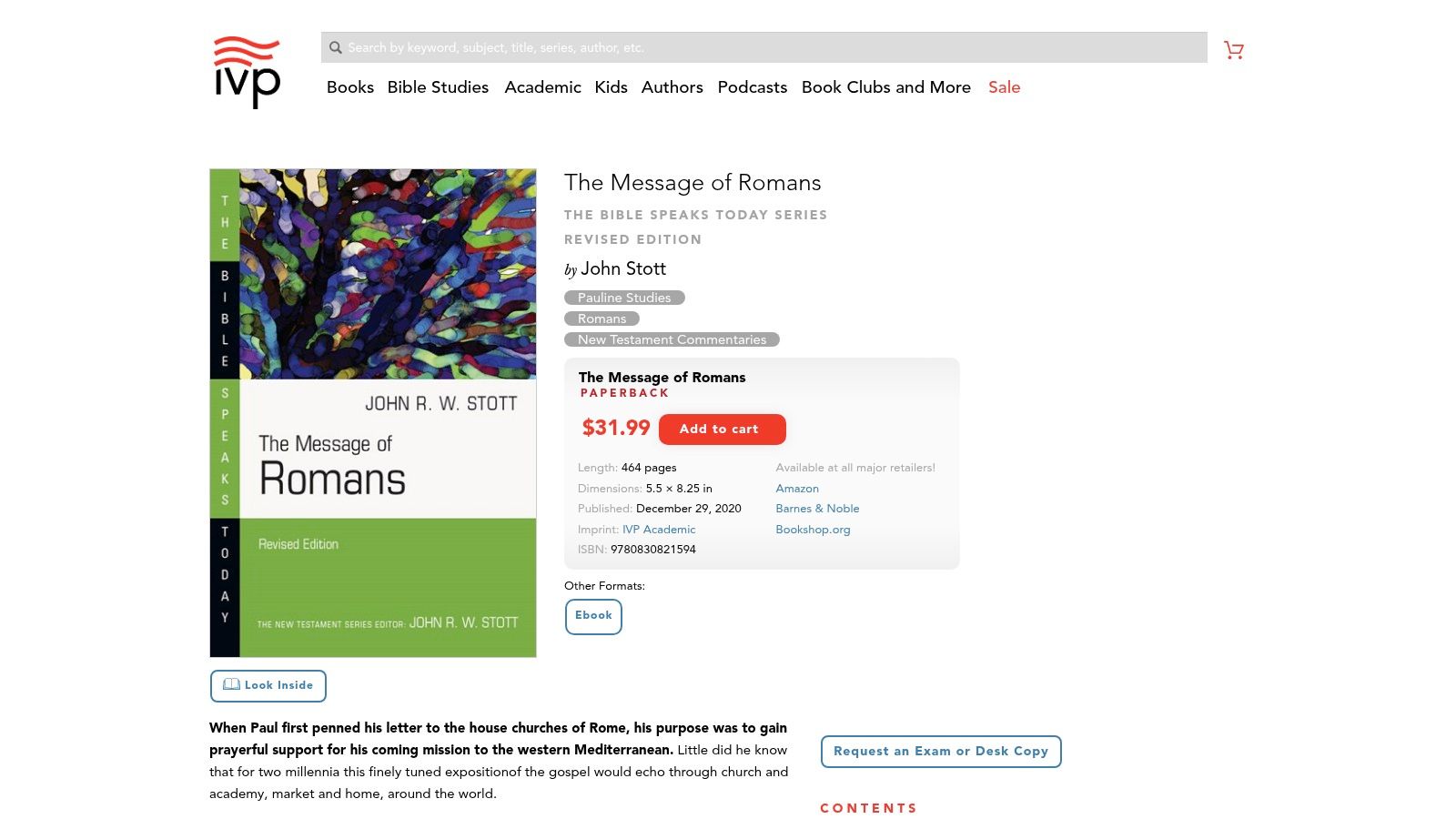
Some books about Romans feel useful for this month. John Stott's The Message of Romans from IVP feels useful for years.
Stott is steady. He's careful with the text, clear in explanation, and consistently interested in how doctrine shapes life. If Keller feels more conversational and Wright feels more panoramic, Stott feels balanced. That's his strength.
The classic choice for thoughtful parents
This revised Bible Speaks Today edition includes a study guide at the end, which gives you a natural way to turn reading into response. That matters because Romans isn't meant to sit in your notebook. It's meant to reshape your loves, your worship, your repentance, and the way you talk to your children about grace.
Here's where Stott especially helps parents. He doesn't rush past the heart. He explains the text, but he also keeps asking what it means for real Christian living. That's a gift when you're trying to disciple children who watch your tone, your patience, and your habits more than your vocabulary.
- Choose this if: You want one dependable, mature companion for a long slow study.
- Skip this if: You want something highly interactive from the start.
- Use it well by: Reading a section, then praying through one truth you want to model at home.
There are newer books. There are more technical books. But Stott remains one of the best all-around recommendations because he helps ordinary Christians handle Romans reverently and clearly.
As you study passages on God's mercy, judgment, and grace, you may find it helpful to turn those truths into prayer for your kids. Little Venture Co.’s Prayers for My Children fits naturally alongside a study like this.
4. Romans (NIV Application Commentary) by Douglas J. Moo
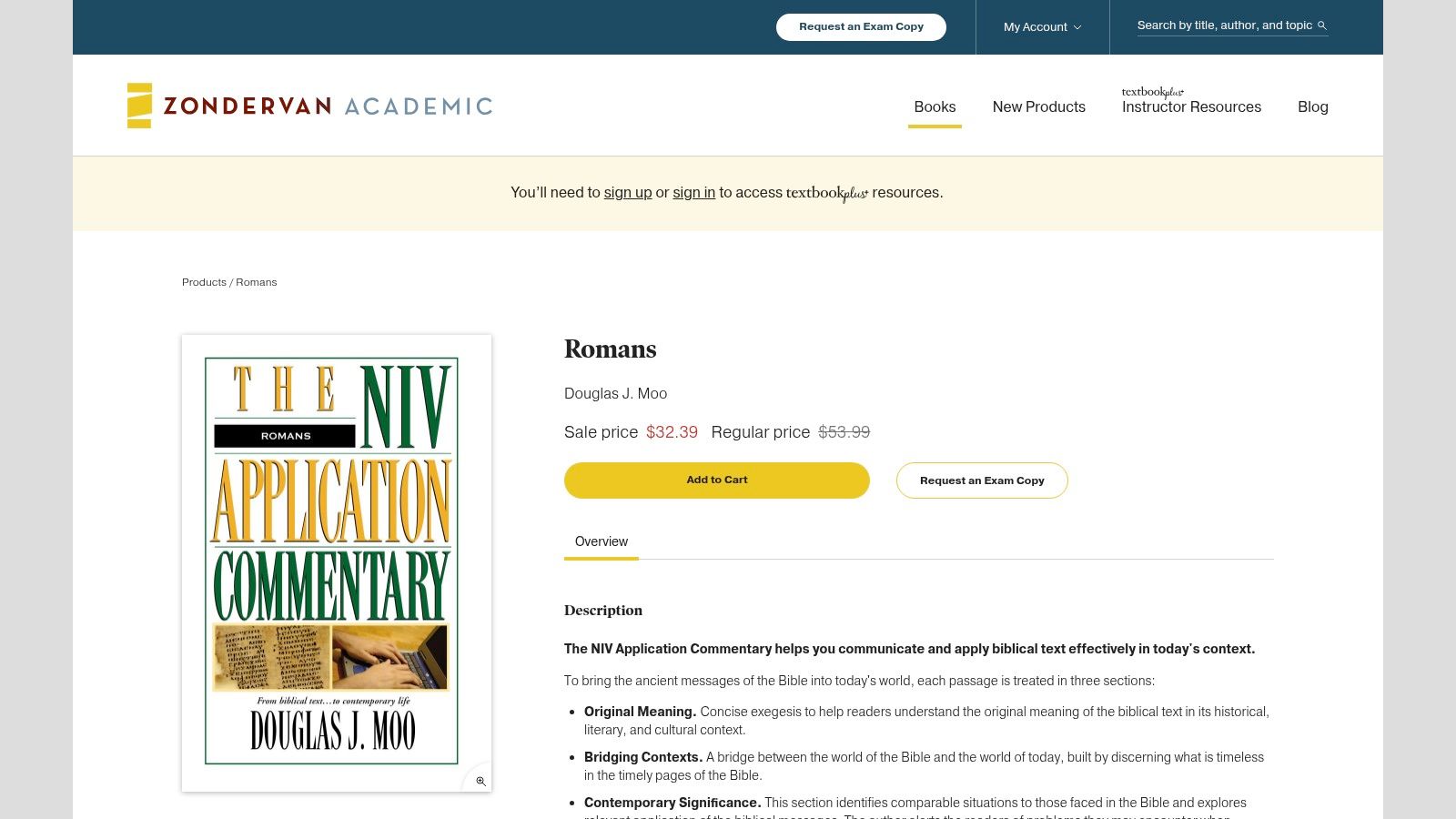
If you're ready for something weightier, go with Douglas Moo's Romans in the NIV Application Commentary series. Many serious lay readers turn to this commentary when they want more than devotional warmth but still care about application.
Moo's structure is one of the best in the genre. He moves from Original Meaning to Bridging Contexts to Contemporary Significance. That simple pattern solves a common problem. A lot of parents either stay in abstract theology or jump too fast to modern application. Moo helps you make the move carefully.
Strongest bridge from study to teaching
This is the book I'd recommend to a parent who leads a Bible study, teaches in church, or wants to explain Romans with more precision to teenagers later on. It's substantial and thoughtful without becoming unreadable.
You'll feel the difference right away. Moo spends real time on what Paul meant in his own context, then works outward to today. That can sharpen the way you answer family questions. Instead of giving vague spiritual advice, you can start grounding your answers in the actual movement of the text.
A useful habit: Read the Bible passage first, then Moo's explanation, then write one sentence beginning with “Because this is true, our family can...”
This isn't a quick bedtime read. It's denser than Keller or Wright, and that's okay. Some seasons call for a sturdier tool. If your goal is to understand Romans well enough to teach it faithfully over time, this commentary earns its place.
And if you want your children to grow up familiar with the language and storyline of Scripture itself, keeping a simple list of Bible verses everyone should know can support that long-term vision.
5. Romans A Concise Guide to the Greatest Letter Ever Written by Andrew David Naselli
Busy parents often need a book that respects their limits. Andrew David Naselli's concise guide to Romans from Crossway does exactly that.
It's short, direct, and organized around the text. You can read a chapter without feeling like you've opened a major project. That makes it ideal for early mornings, lunch breaks, or the stage of parenting where uninterrupted time barely exists.
Best compact option
Naselli gives a verse-by-verse guide with reflection and application questions. That means you're not only absorbing information. You're also slowing down long enough to respond. For personal study, that's a huge advantage.
This one works especially well if you're listening to a sermon series through Romans and want a companion that keeps you focused during the week. It also helps if you're newer to serious Bible study and don't want to start with a massive commentary.
- Best for: Parents with limited time who still want structure and substance.
- Especially helpful when: You're studying solo but want built-in reflection prompts.
- Less helpful if: You want a deep reference tool to keep returning to for technical issues.
This is one of the most practical books about Romans for the parent who wants to build consistency. The format says, in effect, “Open the Bible, read carefully, answer truthfully, keep going.” For many homes, that's exactly the push needed.
There's also value in choosing a shorter guide first. Finishing one good Romans study often gives you the confidence to tackle a fuller commentary later.
6. Romans (LifeChange Bible Study Series) by The Navigators
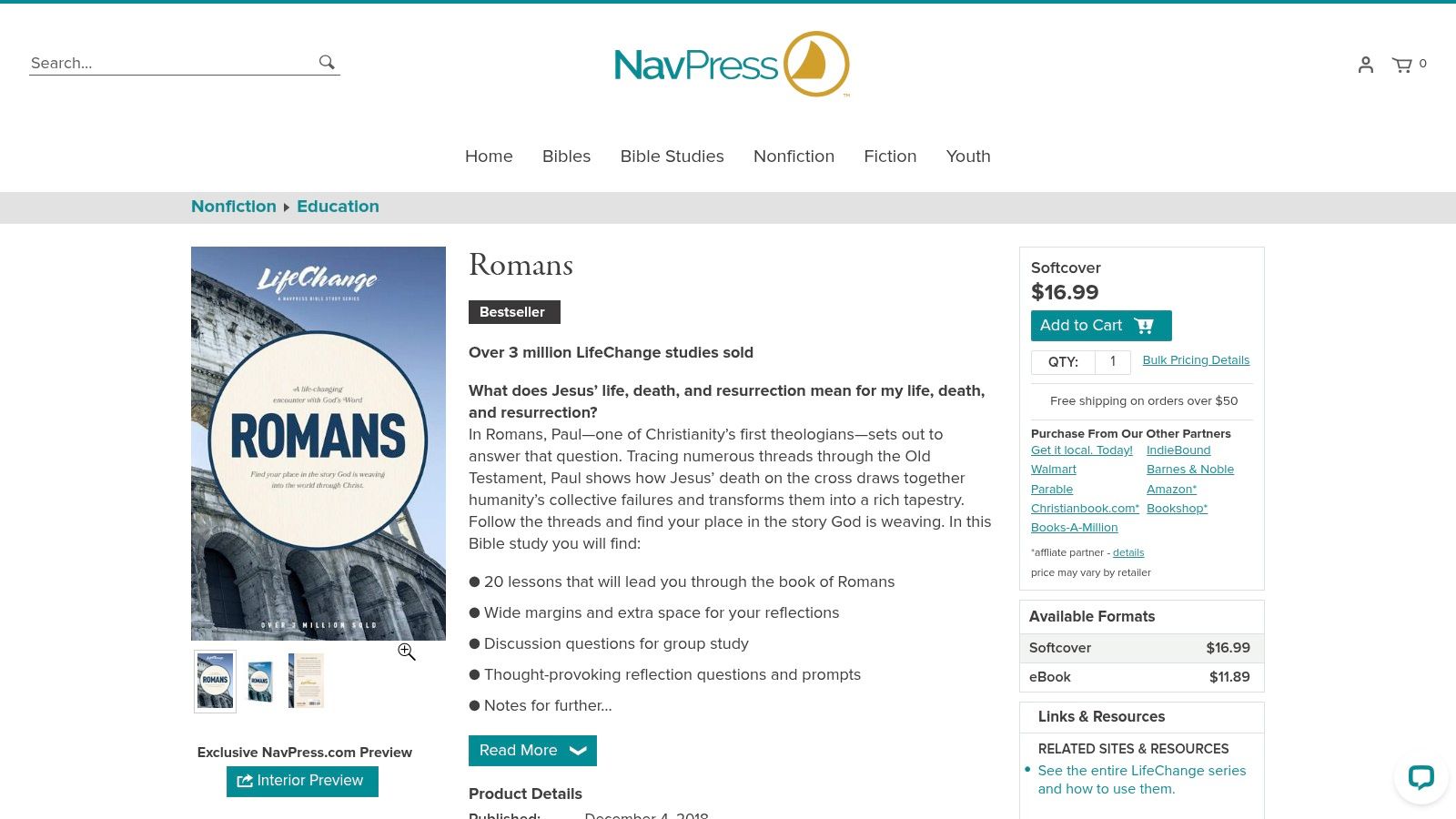
Not every parent wants a commentary. Some need a workbook that teaches them how to study the Bible itself. That's why The Navigators' LifeChange Romans study belongs on this list.
This series uses an inductive approach. You observe, interpret, and apply. That sounds simple, but it's powerful. Instead of leaning on someone else's voice the whole time, you're learning to look carefully at the text and ask better questions.
Best for discussion and habit-building
The workbook format makes this a strong choice for a couples group, moms' Bible study, Sunday school class, or one-on-one discipleship setting. It also works surprisingly well for a parent who wants to build a weekly rhythm of deeper study without overcomplicating things.
The lesson structure helps because it lowers the barrier to starting. You open the book, answer the prompts, read the passage, and keep moving. For many people, that's easier than staring at a commentary and deciding where to begin.
If your long-term goal is to help your children read Scripture for themselves, it helps to become the kind of parent who reads Scripture that way too.
The main limitation is also the main feature. It's a workbook. So if you want long explanations or lots of theological discussion, you'll probably want to pair it with another title from this list. But as a practical study tool, it's excellent.
I especially like this for parents who want to move from “I know Romans is important” to “I know how to sit with Romans and learn from it.”
7. In View of God's Mercies by Courtney Doctor
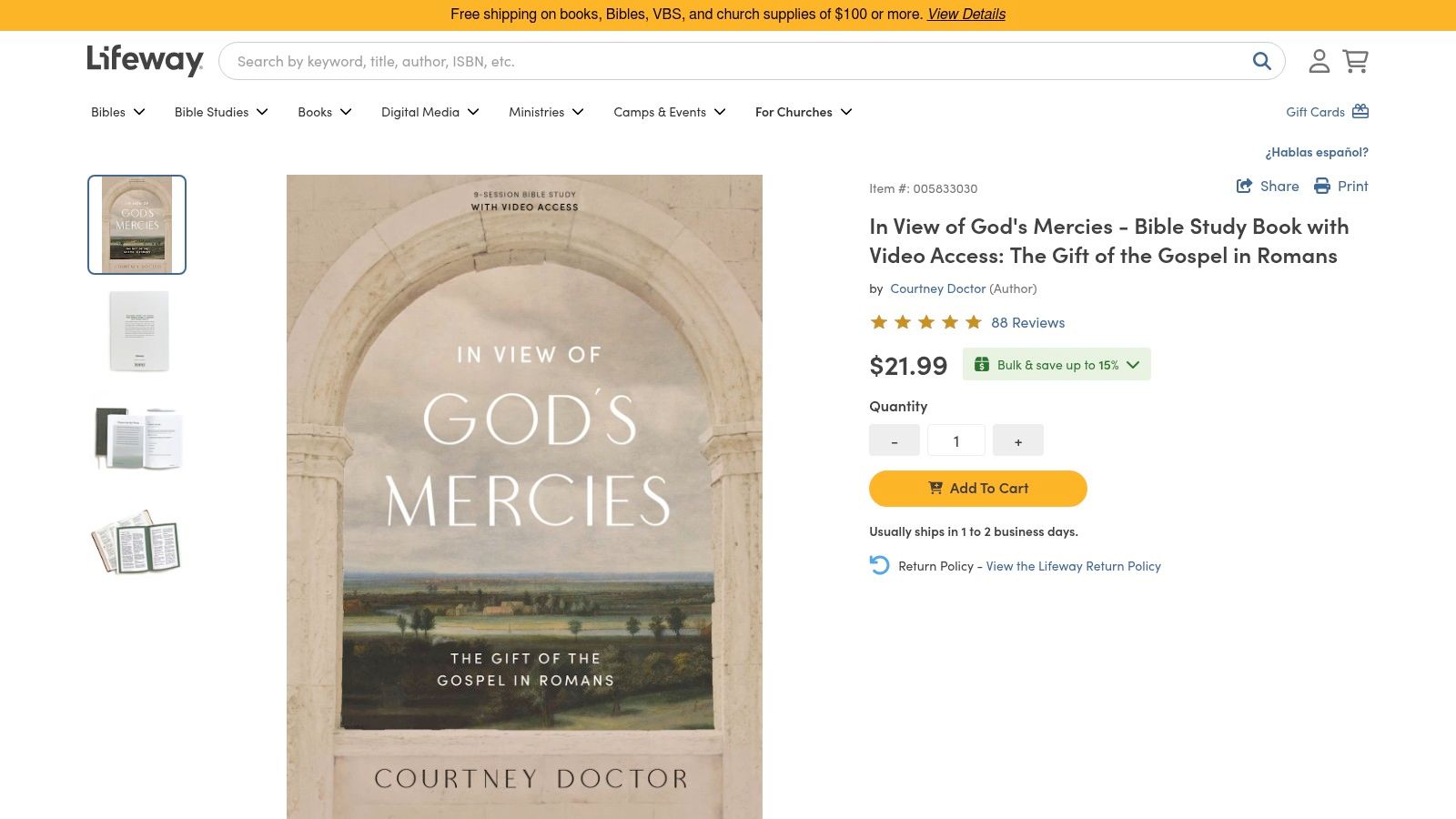
Some parents know they'll follow through better with a guided study than with a stand-alone commentary. If that's you, In View of God's Mercies from Lifeway is the smartest pick on this list.
This study is built as a church-friendly format with video access and discussion prompts. That makes it especially useful for women's groups, mixed adult groups, or a small circle of parents who want accountability while they work through Romans.
Best guided group option
Courtney Doctor emphasizes how the gospel reshapes identity and daily life. That focus matters for family discipleship because children don't only need parents who can define justification. They need parents whose lives are being changed by mercy.
The format is turnkey. You don't have to build your own plan or decide how to pace it. For a busy season, that convenience can be the difference between doing a study and just intending to do one.
This kind of resource also fits a real gap in Romans reading. There's active demand for books and teaching on Romans that connect Paul's argument to contemporary faith, Christian identity, and theology, not just basic summary content (Desiring God's Romans book discussion). That's one reason guided studies like this continue to serve ordinary Christians well.
- Pick this when: You want structure, community, and discussion built in.
- Pass on this when: You prefer purely independent study with no video component.
- Strongest payoff: It helps translate doctrine into worship, hope, and everyday obedience.
For parents who need momentum more than customization, this is a wise and realistic choice.
Seven-Book Comparison: Romans Study Resources
| Title | Implementation Complexity 🔄 | Resource Requirements ⚡ | Expected Outcomes 📊 | Ideal Use Cases | Key Advantages ⭐ |
|---|---|---|---|---|---|
| Romans For You (2-volume), Timothy Keller | Low, pastorally driven, easy to follow | Low–Moderate, two volumes; optional companion guide | Clear gospel application and pastoral encouragement | Personal devotions, small groups, parent study | Accessible, warm exposition; strong practical application 💡 |
| Romans for Everyone (Part 1 & 2), N. T. Wright | Low–Moderate, readable but context-rich | Low–Moderate, two volumes with study questions | Better historical/contextual understanding of Romans | Individuals or groups wanting big-picture narrative | Engaging storytelling and fresh translation; clarifies first-century setting ⭐ |
| The Message of Romans (BST), John Stott | Low, balanced, pastoral exposition | Low, single revised volume with study guide | Reliable doctrinal grounding with devotional insight | Church leaders, thoughtful lay readers, parents | Time-tested clarity and balanced depth; trusted classic ⭐ |
| Romans (NIVAC), Douglas J. Moo | Moderate–High, scholarly with applied focus | High, substantial length (≈544 pp), deeper study time | Robust exegesis tied to contemporary application | Preachers, teachers, serious lay study | Scholarly credibility with practical "bridge to today" sections ⭐ |
| Romans: A Concise Guide, Andrew David Naselli | Low, concise verse-by-verse overview | Low, short format for quick reading | Focused takeaways and reflection-ready themes | Busy parents, small groups, sermon companions | Succinct, theme-centered guidance ideal for quick study 💡 |
| Romans (LifeChange Bible Study), The Navigators | Moderate, inductive workbook requiring facilitation | Low–Moderate, 20 lessons, group materials | Improved Bible-study skills and group discussion | Small groups, Sunday school, learners of inductive method | Teaches observe–interpret–apply method; affordable and practical ⭐ |
| In View of God's Mercies (9-session), Courtney Doctor | Low, turnkey, video-supported study | Moderate, study book plus video access and facilitator | Gospel-centered identity and community encouragement | Women's or mixed adult small groups in churches | Ready-to-run format with video teaching; approachable for newcomers 💡 |
Your Next Step in Family Discipleship
Choosing one of these books about Romans isn't just about starting a new study. It's about letting the gospel sink deeper into your own heart so it can spill into your home in ordinary, faithful ways.
That matters because the questions your children ask won't stay small. Today it might be, “What does it mean to be good?” Later it may be, “Why do people do bad things?” or “How do I know God loves me?” Romans gives you language for all of that. It teaches sin without flattening people into hopelessness. It teaches grace without turning obedience into an afterthought. It teaches justification, mercy, new life, and belonging in Christ.
You don't need the perfect shelf before you begin. You just need one good starting point. If you want the warmest and most readable option, pick Keller. If you want big-picture movement and context, choose Wright. If you want a classic balance of clarity and maturity, go with Stott. If you want stronger study-to-application help, Moo is the one. If your season is packed, Naselli is a smart choice. If you learn best with questions and written responses, use the LifeChange study. If you need group structure and accountability, Courtney Doctor's study is ready to go.
There's also something comforting about remembering what Romans is. Paul's letter was traditionally written in Corinth around AD 55 to 57, and Christians have kept returning to it ever since because it speaks so clearly to the deepest needs of the human heart. You're joining a long line of believers who have opened this letter to understand the gospel more fully.
Start small. Read slowly. Pray often. Write down what convicts you and what comforts you. Then bring that truth into your family in simple ways. A dinner conversation. A bedtime prayer. A patient answer. A confession when you fail. That's discipleship too.
As you wrap your little ones in the comfort of their Little Venture Co. jammies, you can also wrap them in something even better. The steady comfort of the good news you've come to know more profoundly yourself.
Little Venture Co. helps families fill everyday life with comfort and faith-filled meaning. If you're looking for buttery-soft bamboo pajamas, thoughtful gifts for little ones, or pieces that reflect the beauty of God's creation, explore Little Venture Co. for children's wear that feels special and serves a bigger purpose.