

Your Guide to Picking the Perfect Board Book
If you've ever seen a baby with a book, you know exactly what happens. It goes straight into their mouth. Or it gets thrown. Or it's used as a makeshift drum. This is exactly why board books were invented.
Simply put, a board book is a super sturdy book made from thick paperboard, designed specifically for the chaos of infancy and toddlerhood. Its pages are tough enough to survive chewing, drooling, and the surprisingly strong grip of a determined baby, making it the perfect first book for those tiny, curious hands.
Unlocking the Magic of a Board Book
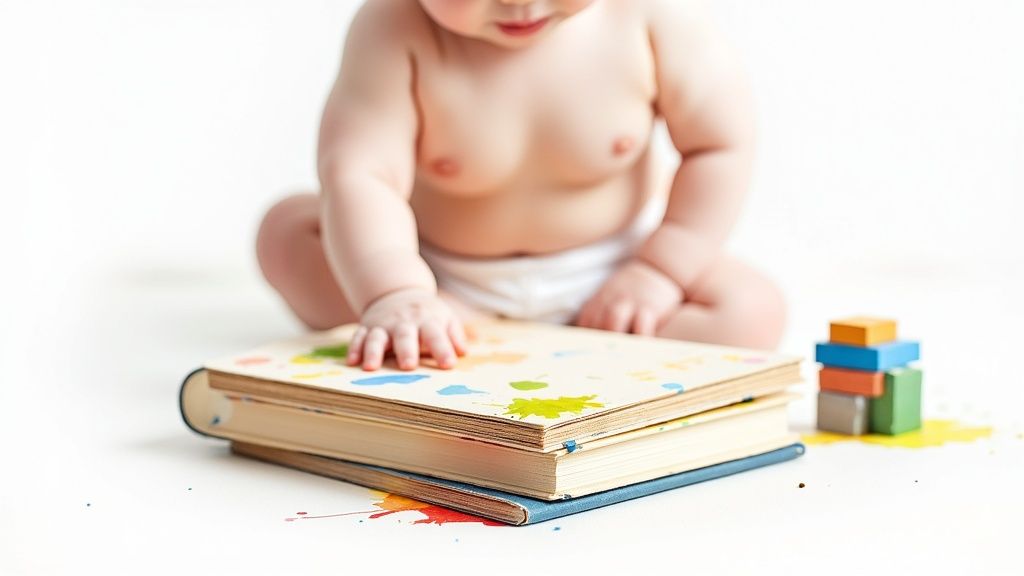
Think about a regular paperback. It’s like a delicate paper kite—beautiful, but one wrong move and it’s ripped. A board book, on the other hand, is more like a set of wooden building blocks. It’s made to be experienced, not just looked at.
Your baby can grab it, stack it, and yes, even give it a good chew without the story falling to pieces. This incredible durability isn't just a happy accident; it's the whole point.
Each page is made from thick, compressed paperboard—often several layers glued together—creating a stiff, chunky page that little fingers can actually grasp and turn. That simple action is a massive milestone for a baby. It gives them a sense of control and independence long before they can handle flimsy paper.
Built for Exploration and Play
The design of a board book is beautifully simple. It takes reading from a passive, "look but don't touch" activity and turns it into a hands-on sensory adventure. This is so important for their early development and is one of the first steps in helping them fall in love with stories.
A board book is more than just a story; it’s a baby’s first interactive toy. It invites curiosity and play, laying the foundation for a lifelong relationship with reading by making it a fun, tangible experience from day one.
This clever design means they are:
- Chew-Proof and Drool-Proof: The laminated or coated surfaces can handle all the moisture and teething that comes with being a baby.
- Tear-Resistant: Unlike paper, these thick pages can stand up to even the most enthusiastic little one.
- Perfectly Sized: They’re usually small and lightweight, so they're easy for infants to hold and explore all on their own.
The Gateway to a Lifelong Love of Stories
At the end of the day, a board book is a gentle and fun introduction to the whole world of books. It’s a safe, engaging tool that connects babies to the rhythm of language, the wonder of pictures, and the cozy feeling of sharing a story with someone they love.
By giving them a book that’s built for their world, we remove the barriers between a child and the magic of reading. This unique mix of toughness and delightful content makes them an absolute must-have for any baby's first library.
When you're ready to start building that special collection for your little one, you can find a beautiful selection of faith-inspired board books perfect for creating those early, cherished memories.
The Hidden Developmental Perks of Reading Board Books

Sharing a board book with your little one feels like one of the sweetest, coziest ways to spend time together. But what you might not realize is that you’re doing so much more than just reading a story—you’re kickstarting a whole world of development.
Think of it as a workout for their tiny hands and growing brain. As your baby fumbles to grasp and turn those thick, sturdy pages, they’re building up crucial fine motor skills. That simple action of flipping a page is strengthening the little muscles in their fingers and hands, laying the groundwork for everything from holding a crayon to buttoning a shirt years down the line.
Building Brains One Story at a Time
Beyond the physical stuff, the real magic is happening inside their head. Every time you point to a picture of a fuzzy lamb and say the word "lamb," a new connection fires in your baby's brain. This is language learning in its purest form—linking a picture to a sound.
A board book acts as a bridge between the world your baby sees and the words you use to describe it. It translates abstract sounds into concrete images, turning language from a mysterious noise into a meaningful tool for understanding.
This daily dose of words and pictures makes a massive difference. Did you know that babies who hear around 5,000 words a day through activities like reading can have a vocabulary that's 1.8 times larger by the time they're three? It's incredible how quickly they soak it all in.
More Than Just Words and Pictures
The perks don't stop with motor skills and vocabulary, either. Board books are fantastic little teachers for some of life’s biggest concepts.
- Cause and Effect: Lifting a flap to find a hidden animal? That teaches them that their actions make things happen.
- Object Permanence: When a character disappears and then pops back up a few pages later, it reinforces the idea that things still exist even when they can’t be seen. (A huge developmental leap!)
- Emotional Connection: Most importantly, that shared experience of snuggling up with a book builds a deep sense of security and love. It tells your child that books are a source of warmth and comfort.
Simple stories, like our Counting Through The Bible board book, even introduce early math concepts in a fun, faith-filled way. Every story time is a small investment with a huge payoff. To see just how powerful this time can be, you can explore more about the profound benefits of reading to your baby.
How to Choose a Board Book That Is Safe and Built to Last
If you're a parent, you've developed a sixth sense for spotting potential hazards. You know that if your baby can get their hands on it, it's probably going straight into their mouth. That’s why picking a safe and durable board book is just as crucial as choosing one with a great story.
Think of that little book as more than just a book—it’s a toy. A well-loved, frequently-chewed, and occasionally-dropped toy. Your first checkpoint should always be the materials. Look for books made with non-toxic, soy-based inks and sturdy, responsibly sourced paperboard. Knowing this means you can breathe easy when your little one decides the corner of the book is the perfect teether.
Spotting Quality Construction
A well-made board book is engineered to survive the beautiful chaos of toddlerhood. The best ones have tough, tightly glued bindings that won’t peel apart after a few too-enthusiastic page turns. When you’re in a store, don’t be shy—give the pages a gentle pull. They should feel solid, not loose or flimsy.
Another small detail that makes a huge difference? Rounded corners. It might seem minor, but sharp, square corners can easily poke a curious eye or scratch delicate skin during an exciting reading session. Rounded edges are a tell-tale sign that the maker had tiny readers in mind.
Think about a board book’s physical strength just as much as its story. A book with sealed edges, thick pages, and rounded corners isn’t just safer—it’s designed to stick around, ready to be loved from one adventure to the next.
Understanding Safety Certifications
All those labels and certifications on products can seem like a foreign language, but when it comes to baby gear, they’re your best friend. They offer proof from an independent source that the book is free from nasty stuff.
For instance, certain certifications guarantee that every single component—from the pages to the ink and even the glue—has been tested for chemicals that could harm a baby's health. We take this very seriously at Little Venture Co., which is why our products meet such high standards. If you want to dive deeper into what these labels really mean for your peace of mind, you can learn all about what Oeko-Tex Standard 100 is and why it’s a big deal for baby products.
Taking a moment to check for these markers of quality gives you total confidence. You'll know you're bringing home a book that’s not just fun and engaging, but completely safe for all the worry-free exploring your little one can dream up.
Matching The Right Board Book To Your Child’s Age
You wouldn't hand a steak to a newborn, right? The same logic applies to books. The board book that fascinates a 3-month-old will likely get tossed aside by a busy toddler. Picking the right book is all about matching its features to where your child is developmentally.
Think of it like tuning a radio. You have to find just the right frequency for each age to get a clear, engaging signal. For the littlest listeners, simplicity is everything, while older toddlers need more complex and hands-on stories to stay tuned in.
Newborns to 6 Months: Vision and Contrast
In those first few months, your baby's world is a beautiful, fuzzy blur. Their vision is just coming into focus, and they can't really pick out subtle colors yet. This is exactly why high-contrast, black-and-white board books are so captivating for them.
The sharp difference between black and white sends the strongest possible signal to their developing eyes. Those simple, bold shapes and patterns actually help stimulate their optic nerves, teaching their eye muscles how to work together. It’s their very first step in learning to focus and make sense of the world around them.
A high-contrast board book is like a visual playground for a newborn’s brain. It provides the perfect level of stimulation to help build foundational visual tracking skills without overwhelming their developing senses.
6 to 12 Months: Texture and Recognition
Once your baby starts sitting up and grabbing for things with real intention, their world—and their interests—explodes. This is when they begin connecting objects with names and become completely fascinated by different textures. It's the perfect time to bring in books with tactile elements.
Look for a board book with features like:
- Simple, clear photos of things they see every day, like a ball, a bottle, or the family dog.
- Touch-and-feel elements, such as a patch of soft fur on a sheep or a crinkly texture on a leaf.
- Mirrors, which are endlessly entertaining for babies just discovering their own reflection.
These sensory additions turn reading into a full-body experience, engaging their sense of touch right alongside sight and sound.
Toddlers from 1 to 3 Years: Story and Interaction
When your little one hits toddlerhood, their desire for interaction and understanding goes through the roof. They’re ready for more than just looking at pictures; they want stories and a chance to get involved. This is when board books with simple plots, repetitive phrases, and interactive parts really shine.
Books with flaps to lift, sounds to press, or simple rhymes let them become active participants in the story. This kind of hands-on play helps them figure out concepts like cause and effect while building their vocabulary. To help sort through all the great options out there, check out this guide on the best board books for babies that grow with your child.
To make it even easier, here's a quick guide to help you find the perfect book for your little one's current stage.
| Age Range | Developmental Focus | Recommended Book Features |
|---|---|---|
| 0–6 Months | Developing vision, focusing on faces and patterns | High-contrast (black & white), simple shapes, faces, unbreakable mirrors, cloth or soft vinyl materials. |
| 6–12 Months | Exploring with hands and mouth, object recognition | Touch-and-feel textures, sturdy cardboard pages, photos of familiar objects, lift-the-flap elements. |
| 12–18 Months | Learning first words, cause and effect | Books with one or two words per page, simple rhymes, sound buttons, pictures of other babies. |
| 18–24 Months | Growing vocabulary, following simple stories | Repetitive phrases, simple narratives about daily routines (bedtime, meals), pointing-and-naming books. |
| 2–3 Years | Understanding concepts, interactive storytelling | More complex stories, counting or alphabet books, books about feelings, matching games. |
Choosing a book that aligns with their developmental milestones makes reading more fun and far more impactful, turning story time into a powerful learning opportunity.
This timeline shows just how much thought goes into making modern board books safe and engaging for our little ones.
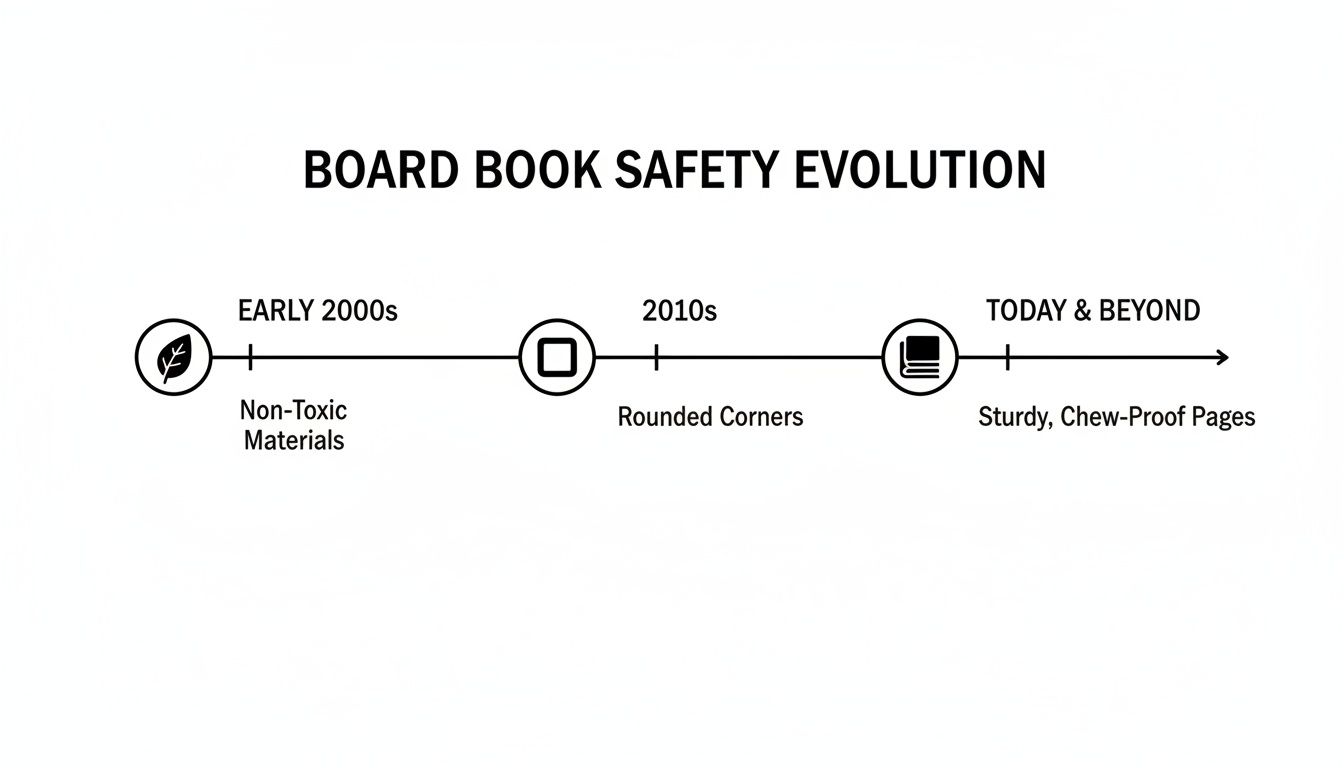
From non-toxic materials to durable, rounded pages, you can see how safety has become just as important as the story inside.
How to Make Story Time a Cherished Daily Ritual
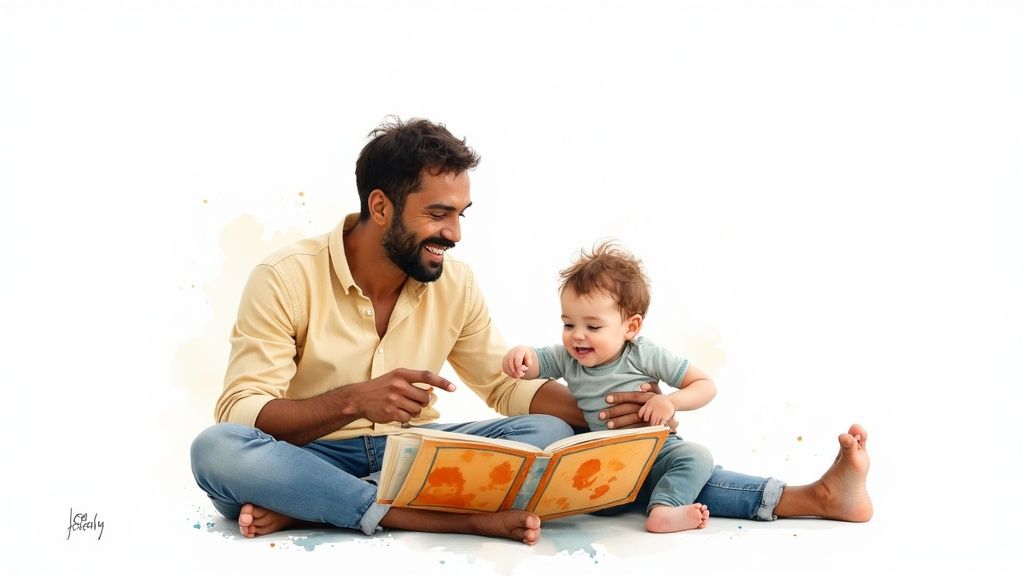
The real magic of a board book isn't just in its sturdy pages; it's in the cozy, shared moments it creates between you and your child. Sure, just reading the words on the page is a wonderful start. But turning story time into an interactive, bond-building experience is where the truly lasting memories are made.
Think of yourself as the director of a tiny, wonderful play. The book is your script, but you’re the one who brings it to life. This means getting a little silly and turning a simple reading session into a fun, multisensory adventure.
This shared time does more than just entertain. It builds powerful, positive feelings around reading. When story time feels like a joyful, comforting event, your child learns that books are a source of connection and fun—a lesson that will stick with them for years.
Bring the Story to Life
Your voice is your most powerful tool! Instead of reading in a flat tone, play around with different voices for each character. Give the big bear a deep, rumbly voice and the little mouse a high-pitched squeak. You don’t have to be a professional actor; your baby will be your most adoring fan.
Don't forget the sound effects. If you see a picture of a cow, let out a loud "Moo!" When you read about a train, make a "Choo-choo!" sound. These simple noises are incredibly engaging for little ones and help them connect words to the world they're just starting to figure out.
Story time isn't a performance; it's a conversation. By adding sounds, voices, and questions, you invite your child to become an active participant, turning a passive activity into an exciting, shared adventure.
Make Reading an Interactive Game
Get their little minds working by asking simple, playful questions. Point to the page and ask, "Where is the big, red ball?" or "Can you find the yellow ducky?" This turns reading into a fun little scavenger hunt, encouraging them to look closely at the pictures and join in.
Connecting the story to their own life makes it even more meaningful. After reading a book about animals, point out a dog on your next walk. If a character is eating an apple, mention it the next time you give them a slice for a snack.
These simple tricks help your child see that the stories in their books are connected to the real world. This boosts their understanding and shows them how relevant reading is to their own life. These moments can easily become part of a peaceful evening routine, and you can find more ideas for creating a calming atmosphere in our guide on bedtime prayers for babies.
By weaving these simple, interactive habits into your daily reading, you’re doing so much more than just sharing a story. You’re creating a cherished ritual that builds a deep bond and sparks a lifelong love for books.
Keeping Your Board Book Collection Looking Great
Board books are designed to survive the toddler trenches, but a little care can keep them looking fresh through years of story times—and maybe even for the next baby. Let's be real: sticky fingers, teething gums, and pure, unadulterated toddler enthusiasm can put any book to the test.
Luckily, you don't need a professional library restoration kit to keep them in good shape. A few simple habits are all it takes to maintain your family's collection.
Simple Cleaning and Repair Tips
For the usual daily grime (think drool, smudges, and mysterious sticky spots), a cloth dampened with a little water is your best friend. Just wipe and go. If you're dealing with something more stubborn, like the remnants of a snack, a tiny drop of mild soap on the cloth should cut through it.
The most important step? Always wipe the pages completely dry. This keeps moisture from sneaking into the cardboard layers and causing them to warp or peel.
Of course, little accidents are part of the territory. But a tear or a bent corner doesn't have to mean retirement for a beloved book.
Just as you mend a favorite stuffed animal, caring for their books shows your child that stories are treasures worth protecting. It’s a small act that quietly builds a lifelong respect for reading.
Here are a couple of quick fixes for the most common book injuries:
- Bent Corners: Gently work the corner back into shape with your fingers. If it's a really stubborn crease, you can press the book under a stack of heavier books overnight to flatten it out.
- Minor Page Separation: If the layers of a page start to peel apart, a tiny dab of non-toxic, acid-free glue is all you need. Apply it with a toothpick for precision, press the layers together firmly, and let it dry.
Smart Storage for Little Hands
Finally, let's talk about where the books live when they're not in use. The goal is to make them easy for your little one to grab on their own.
Storing them in low, open baskets on the floor or on a forward-facing bookshelf is perfect. This setup not only keeps things tidy but also empowers your child to pick out their own stories, turning reading from something you do for them into something they can do for themselves.
A Few Common Questions We Hear All the Time
If you've got questions, you're in the right place. Being a curious parent is practically part of the job description! Let's clear up a few of the most common queries about the wonderful world of board books.
When Is the Right Time to Start?
Honestly? It's never too early. You can start reading a board book to your baby right from day one.
A newborn won't follow the story, of course, but they'll be soothed by the rhythm of your voice and absolutely captivated by simple, high-contrast images. This early start creates a warm, happy connection with books long before they can even think about turning a page themselves.
How Many Books Does a Baby Need?
There's no magic number here. What really matters is quality over quantity.
A small, rotating collection of 5-10 board books is a fantastic place to start. This gives your little one enough variety to stay interested but also lets them get familiar with their favorites. That repetition is golden for early learning and builds a sense of comfort.
The goal isn't to build a massive library overnight. It's about creating a small, accessible collection of beloved stories that become a cherished part of your daily routine, sparking joy and connection with every read.
Are Board Books and Picture Books the Same?
They're cousins, but not twins! The biggest difference is how they're made.
A board book is printed on thick, sturdy paperboard, specifically designed to withstand the love (and chewing) of babies and toddlers. A traditional picture book, on the other hand, has thin paper pages and is usually meant for kids around age 3 and up who have the fine motor skills to be a bit more gentle.
Think of a board book as the tough, lovable younger sibling built for hands-on exploration.
At Little Venture Co., we pour our hearts into creating beautiful, faith-inspired treasures designed to be part of your family’s most cherished moments. Explore our collection and find the perfect story to share with your little one.