

Baptism Outfits for Toddlers: A Complete Guide for Parents
You're three minutes into the baptism, your toddler is tugging at a stiff collar, cheeks are pink, and one grandparent is whispering that the outfit looks beautiful. You're thinking about the damp patch spreading across the back, whether the long hem is under someone's shoe, and how you'll manage the next diaper change without sacrificing the entire look.
That's the part most guides skip. Baptism outfits for toddlers aren't primarily a fashion decision. They're a ceremony-day logistics problem. The right outfit respects the church, photographs well, and lets a busy little person move, cool down, sit, stand, and get changed without turning the day into a wrestling match.
The Toddler Baptism Day Reality Most Guides Skip
Toddlers don't understand that delicate lace is heirloom-worthy. They understand that a collar scratches, sleeves feel tight, and the nearest interesting object is probably across the aisle. They'll wriggle during the blessing, reach for a candle, crawl under a pew, or decide that the family portrait is the perfect time to remove one shoe.
A formal outfit can make those ordinary toddler moments harder. A long gown may twist around walking feet. A stiff waistband can press into a full diaper. Heavy layers can trap heat during a long service, while loose sleeves and trailing fabric become awkward around candles, furniture, and busy adults.
The practical test: Your child should be able to sit, stand, walk, and be picked up without the outfit fighting every movement.
The outfit also has to survive the unphotogenic parts of the day. There may be a delayed meal, a spilled drink, a wet diaper, a snack offered by a well-meaning relative, or a sudden need to change clothes in the back seat. Parents often choose the ceremony look first and think about those details later. That order creates stress.
Comfort affects the whole family
A comfortable toddler is easier to hold and less likely to spend the service pulling at clothing. That matters for parents, godparents, clergy, and grandparents who all want to focus on the meaning of the ceremony rather than repeatedly fixing a sash or smoothing a bunched-up hem.
Look at the day through four practical lenses:
- Comfort: Can your child wear the fabric for several hours without overheating or itching?
- Mobility: Can the outfit accommodate walking, climbing onto laps, and ordinary toddler movement?
- Diaper access: Can you reach the diaper quickly without removing every layer?
- Emotional ease: Will you feel prepared if the outfit gets wrinkled, damp, stained, or rejected?
The historical tradition supports flexibility rather than one rigid silhouette. Specialized christening gowns developed in the 18th century, after earlier baptism clothing grew out of swaddling and bearing cloths. Wider use among ordinary families followed by the mid-19th century, according to the Museum of Modern Art Antwerp's history of christening gowns. A toddler doesn't need to be dressed like a swaddled infant because the event is traditional.
Choose an outfit that lets your child participate comfortably. The beautiful photographs will be better when your toddler isn't miserable, and you'll remember the ceremony instead of managing a clothing emergency.
The Four Non-Negotiables for Any Baptism Outfit
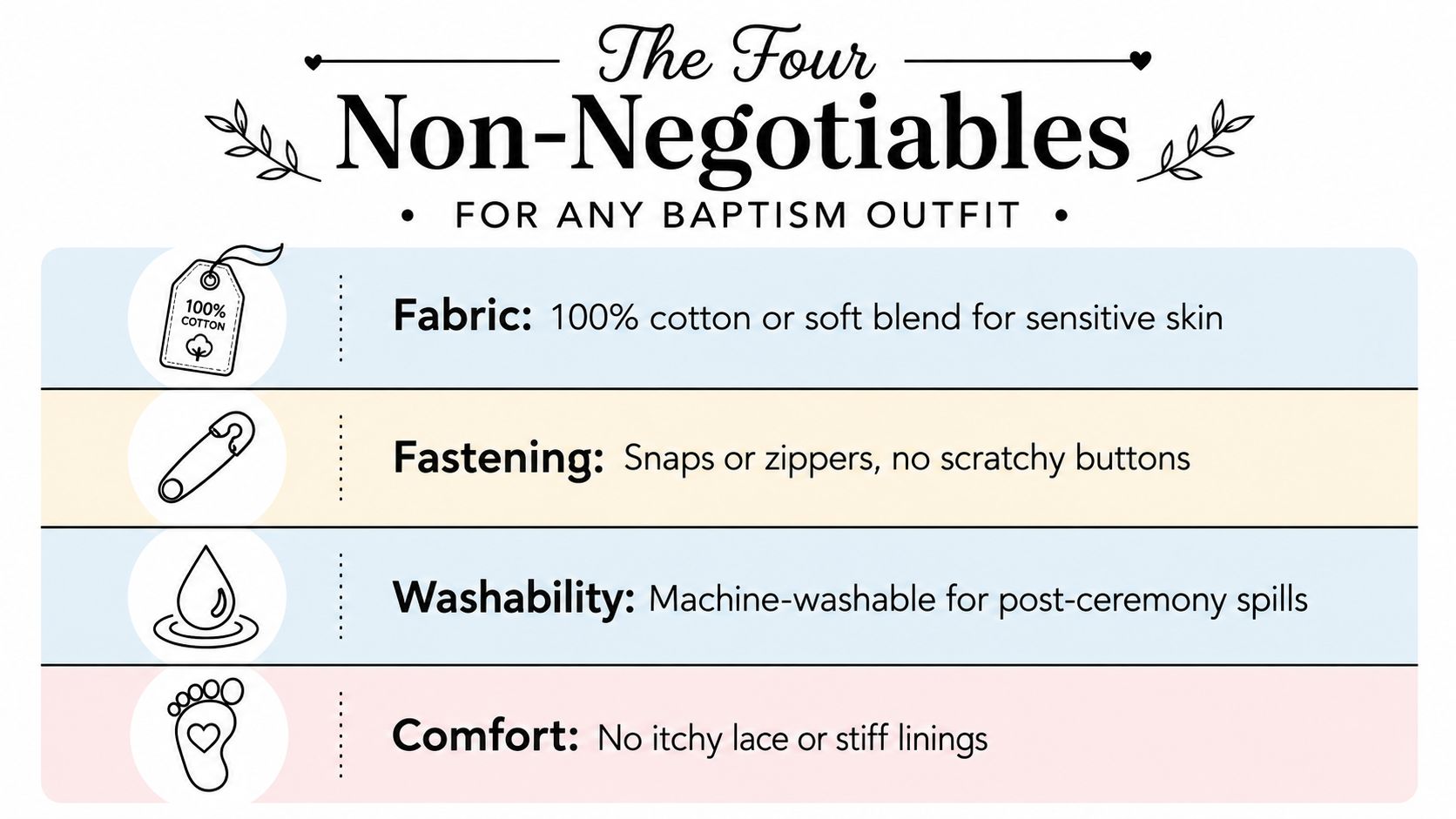
Before you compare lace, embroidery, collars, or colors, make the outfit clear four checks: fabric, fit, safety, and certification. If it fails one, it doesn't go in the cart.
Start with the fabric
Choose breathable materials that feel soft against the skin. Cotton, cotton-linen blends, and bamboo viscose can work well for a formal toddler outfit when the construction is light and the child isn't buried under layers. The fabric should feel comfortable at the neckline, under the arms, and around the diaper area.
Avoid anything that feels hot, plasticky, stiff, or scratchy in your hands. Touch the inside, not only the decorated outer layer. A beautiful embroidered front doesn't help if the backing rubs your child's chest.
For a closer look at choosing materials for delicate skin, use this guide to the best fabric for sensitive skin.
Fit matters more than the size label
A baptism outfit needs room for movement, but it shouldn't hang like a curtain. Check that your toddler can bend their knees, raise both arms, and sit without the crotch or waistband pulling. Keep sleeves clear of the hands, and avoid excess length that can catch under shoes.
Diaper access deserves its own inspection. Snaps at the inseam or a wide opening at the back can save you from stripping off a formal top during a rushed change. Tight cuffs, restrictive boning, and complicated back closures belong on the skip list.
Treat safety as part of styling
Look for covered seams, smooth labels, and secure fastenings. Snaps or a well-made zipper are generally easier to manage than a row of tiny buttons, especially when the child is tired or resisting.
Check every trim before dressing your toddler. Loose beads, detachable bows, fragile buttons, and small decorative pieces can end up in a child's mouth. If the outfit will be worn near candles, indoor heating, or service-adjacent activity, minimize trailing fabric, loose sleeves, and excess drape. U.S. Consumer Product Safety Commission guidance on children's sleepwear distinguishes sleepwear from daywear and warns that loose-fitting cotton or cotton-blend garments shouldn't be used as sleepwear because they can ignite and burn faster.
Look for meaningful certification
OEKO-TEX STANDARD 100 has a baby and children's product class designed for children up to 3 years old, the age range relevant to many toddler baptism outfits. Its strict product-class approach is especially relevant when seams, dyes, trims, and lining remain against the skin for hours. You can review the standard's product-class information in the OEKO-TEX STANDARD 100 requirements.
Look for the OEKO-TEX name and certification details on the product page or garment labeling. Don't assume a certified main fabric means every trim or lining has been tested. Ask what touches the skin, particularly at the neck, cuffs, and inner seams.
Traditional Whites vs Modern Neutrals and Gender-Neutral Choices
White remains the safest choice when your church, denomination, or family tradition expects a classic baptism look. It also creates a clean visual line in group photographs and connects naturally with the ceremony's symbolism. Still, white isn't the only respectful option, and a toddler-friendly outfit doesn't have to resemble a miniature bridal gown.
Historical tradition is more flexible than many families realize. White christening garments became a strong modern norm around 1800, rather than being an unchanging requirement across all earlier baptism traditions, as explained by ScienceNorway's account of christening gowns and color. Families should still follow the expectations of their own church first, but cream, ivory, and restrained neutral shades can feel reverent without looking overly formal.
Choose the color story before the decoration
Ask three questions:
- Does the church have a stated preference?
- Do the parents and grandparents want a traditional family photograph?
- Will the color and silhouette help the toddler stay comfortable?
A cream romper can look just as polished as a white gown while offering better movement. Oat, sage, dusty blue, and warm taupe can create a gentle, contemporary palette for families who prefer less gendered styling. A simple tunic with matching trousers or a soft two-piece set can also make diaper changes easier than a layered dress.
| Factor | Traditional White | Modern Neutral |
|---|---|---|
| Church expectations | Usually the safest choice for formal settings | Confirm expectations before choosing |
| Family photographs | Crisp, classic, and highly ceremonial | Soft, natural, and more contemporary |
| Toddler practicality | Depends heavily on the cut and layers | Often available in rompers and separates |
| Gender styling | May lean toward dress, gown, or formal suit | Works easily with tunics, sets, and rompers |
| Reuse after baptism | Formal pieces may be reserved for special occasions | Separates can become Sunday-best or photo clothing |
Some churches and grandparents will still expect white. The easy compromise is a neutral base with a white overlay, shawl, blanket, collar, or cardigan for the ceremony and photographs. Remove the extra layer afterward if your child is warm.
My recommendation: Match your family's tradition first, then choose the most mobile, breathable silhouette within that color story.
Putting the Outfit Together Styling Tips for Squirmy Toddlers
A successful baptism outfit is usually a simple base plus one meaningful finishing piece. Don't build a complicated costume that requires constant adjustment. Build a look your toddler can wear while sitting on a lap, walking over polished floors, and getting changed in a cramped restroom.
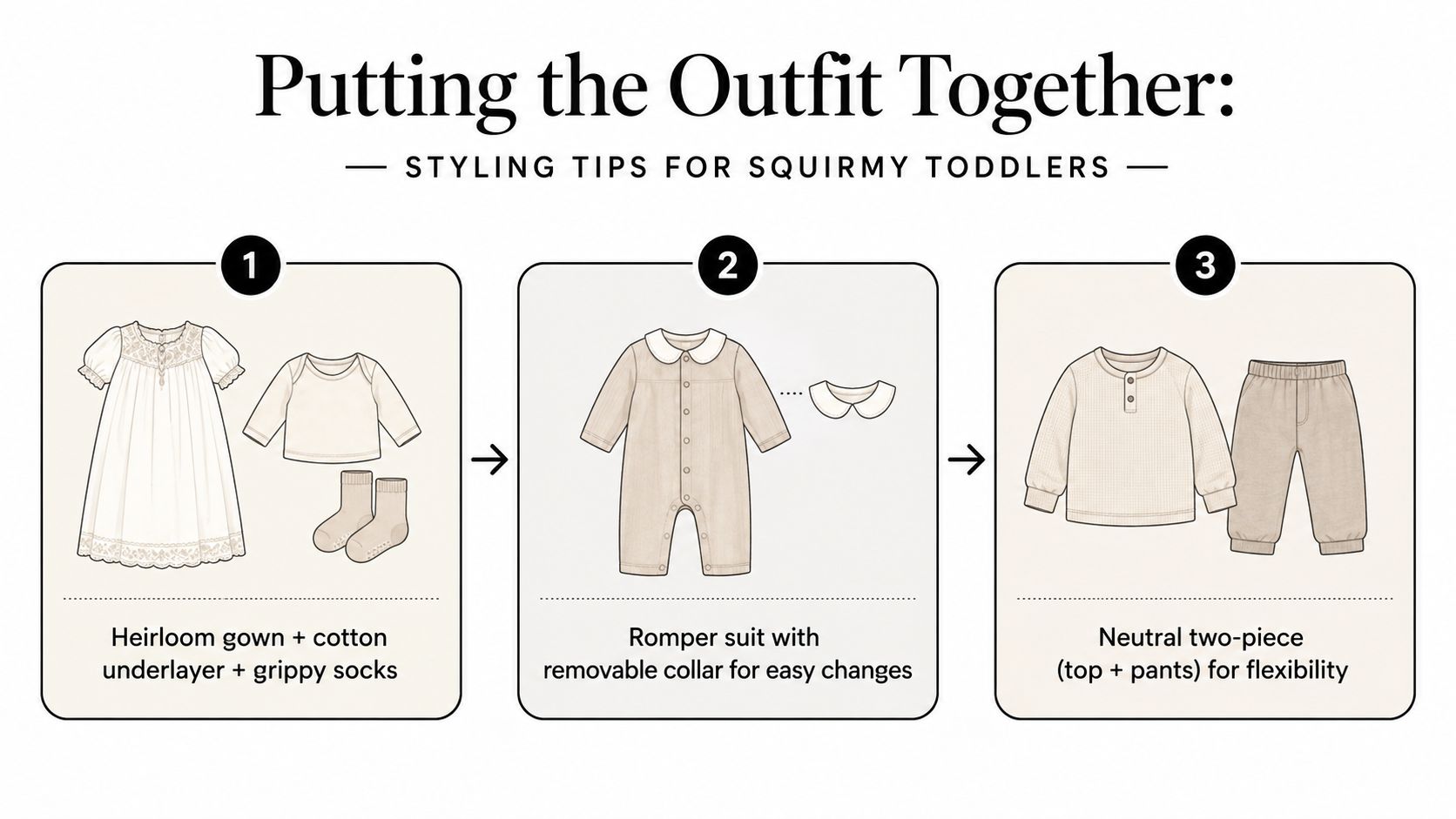
Four formulas that work
Heirloom gown formula: Pair the gown with a soft cotton underlayer and grippy socks. Keep the underlayer simple so the gown remains the visual focus and the child has a comfortable barrier between skin and decorative fabric.
Romper formula: Choose a white, cream, or muted neutral romper with a removable collar. Add a light cardigan if the church feels cool, then take it off for photographs or active play.
Two-piece formula: Use a breathable top with pull-on trousers or bloomers. This is the easiest choice for a toddler who needs frequent changes because you can replace one piece without rebuilding the entire outfit.
All-in-one formula: A zip-front outfit with a coordinating bonnet or soft cap gives you a polished look with very little fastening. It's especially practical when the ceremony involves travel or when your child is likely to resist dressing.
For boys, copy this: cream romper, soft cotton undershirt, white or oat cardigan, grippy socks, and soft-soled shoes. For girls, try this: short formal dress or romper, cotton bloomers, lightweight cardigan, and a simple smocked headband. For a unisex look, use an oat or sage two-piece set, cream socks, and one white blanket or collar.
Avoid ties, rigid shoes, long veils, scratchy mittens, and rhinestones that can loosen or become a mouth-level distraction. A soft headband, light cardigan, and secure soft-soled booties earn their space in the bag. Everything else needs to justify the trouble it creates.
If your toddler has strong reactions to seams, tags, or tight clothing, review this advice on sensory clothing issues before choosing a formal base layer.
The best pieces can be worn again for Sunday gatherings, family portraits, holidays, or other special occasions. That makes a simpler outfit more useful than a highly decorated piece your child can tolerate only once.
Here's a quick visual guide to the three easiest combinations:
Comparing the Most Common Baptism Outfit Looks
There's no single correct baptism silhouette for a toddler. The right choice depends on how much formality your family wants, how active your child is, and whether you'll need to change a diaper during the event.
A long christening gown still makes sense for a very traditional family, especially when an heirloom has been worn by siblings or relatives. Royal and family gowns demonstrate how ceremonial clothing can become a long-lived object. The historical account of royal christening gowns records continuous use of heirloom gowns in several royal families, including the British royal family for 163 years by 2019. That's a powerful reason to honor a family garment, but it doesn't mean every toddler needs a floor-length design.
| Outfit | Formality | Diaper Change Ease | Mobility | Best For |
|---|---|---|---|---|
| Long christening gown | Highest | Low unless it has a practical opening | Limited for walkers | Heirloom-focused families and formal photo sets |
| Romper suit or jon-jon | Formal but flexible | High with inseam snaps | Strong | Active toddlers who still need a polished look |
| Two-piece top-and-pants set | Moderate to high | Very high | Strong | Mild weather and families who value reuse |
| All-in-one zip footie | Moderate | Highest | Good, depending on the cut | Travel-heavy or low-fuss ceremonies |
My pick for each toddler
For most squirmy walkers, choose a romper suit or zip-front outfit. It gives you a ceremonial finish without putting loose fabric around busy feet, and it makes a diaper change far less dramatic.
Choose the gown when family tradition carries real emotional weight and the toddler will spend most of the service held. Choose the two-piece set when weather may change and you want to adjust layers quickly. Choose the all-in-one zip when convenience matters most, especially if the day includes driving, multiple locations, or a child who strongly dislikes dressing.
The wrong choice isn't a less traditional color. It's an outfit that makes your child hot, trapped, or impossible to change.
The Ceremony Day Game Plan From Dress Up to Photo Time
Preparation starts the night before, not while everyone is waiting by the front door. Remove tags, check every fastening, wash the outfit according to its care instructions, and dress your toddler in it briefly at home. A practice run reveals scratchy seams, tight sleeves, and closures that look simple online but take too long in real life.
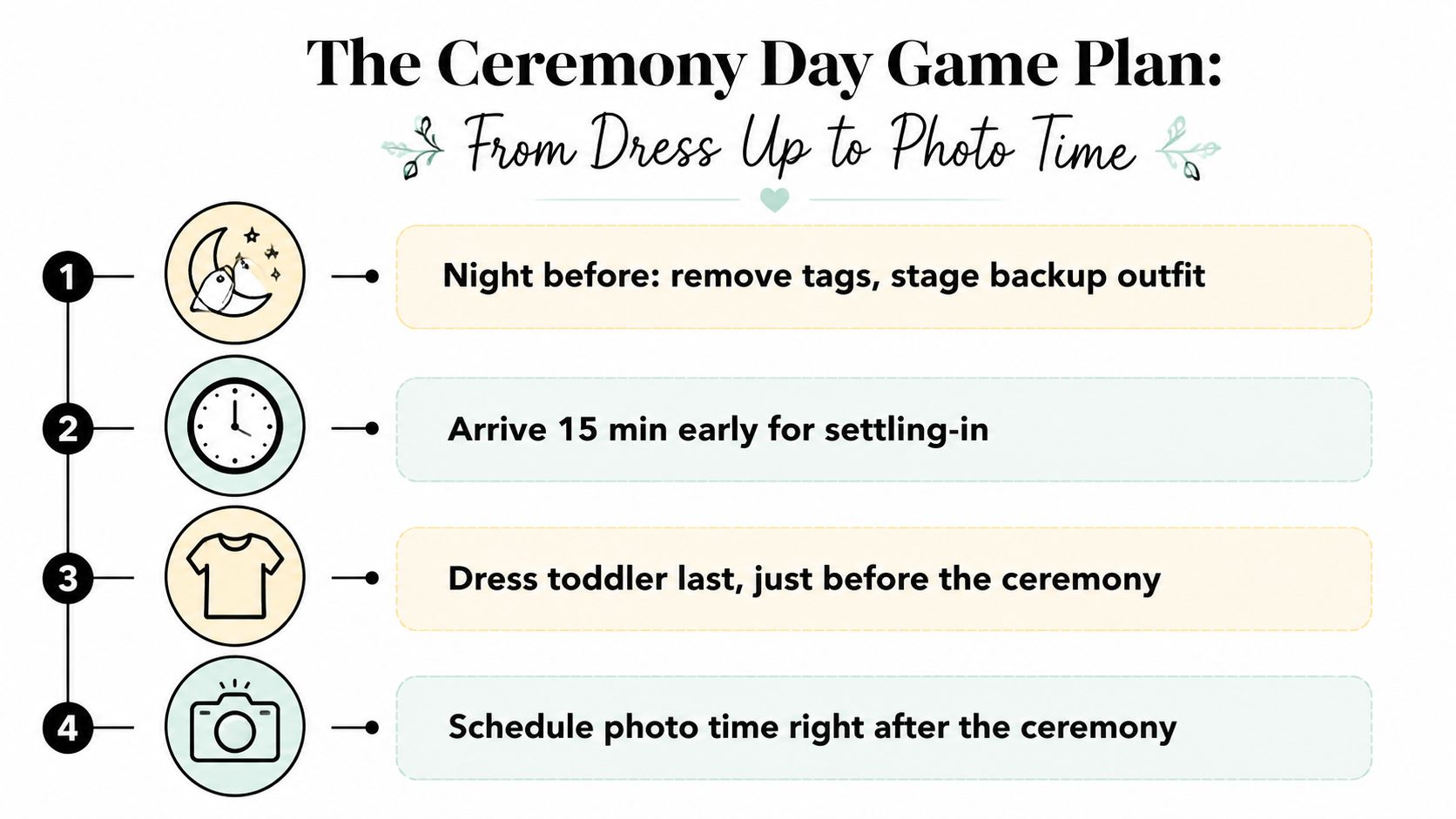
Stage the backup outfit where you can grab it quickly. A clean romper or simple two-piece set is better than carrying spare decorative pieces that don't solve the problem.
Use this order on the day
- At home: Pack the backup clothes, wipes, diapers, stain stick, cardigan, socks, and a sealable bag for anything wet or soiled.
- Before leaving: Dress your child in the comfortable base layer, but save the formal top layer and accessories for later if possible.
- On arrival: Give your toddler time to settle. The visual checklist in the ceremony plan recommends arriving 15 minutes early, as shown in the supplied ceremony day preparation infographic . Dress the toddler last when you can, just before the service.
- During the ceremony: Keep a clean blanket over the lap if the setting allows it. Offer food away from the formal layer, and use a quiet, familiar toy rather than a new distraction that may become more interesting than the ceremony.
- Afterward: Change into the backup set before the reception or car ride if the outfit is already damp or stained. Schedule family photographs in short sessions rather than expecting one long, perfectly cooperative shoot.
Pack this checklist:
- Full change of clothes: Include a complete replacement, not only a spare shirt.
- Wipes and diapers: Keep them in an outer pocket for quick access.
- Grippy socks: Bring a clean pair in case shoes come off.
- Stain stick: Treat small marks before they settle.
- Light cardigan: Add warmth without rebuilding the outfit.
- Photo accessory: Pack a hat or headband only if your toddler tolerates it.
- Sealable bag: Store wet or soiled clothing separately.
Don't debut new shoes, stiff collars, or complicated hair accessories on baptism day. Your toddler should already know what the outfit feels like.
For more planning around a polished child portrait, see these practical ideas for what to wear for newborn photos, then adapt the same comfort-first thinking for a walking toddler.
Gift Ideas That Pair Beautifully With the Outfit
The most thoughtful baptism gifts support the story of the outfit instead of competing with it. A beautiful garment becomes more meaningful when relatives add something that helps the family preserve, use, or remember the day.
Keepsakes for the memory box
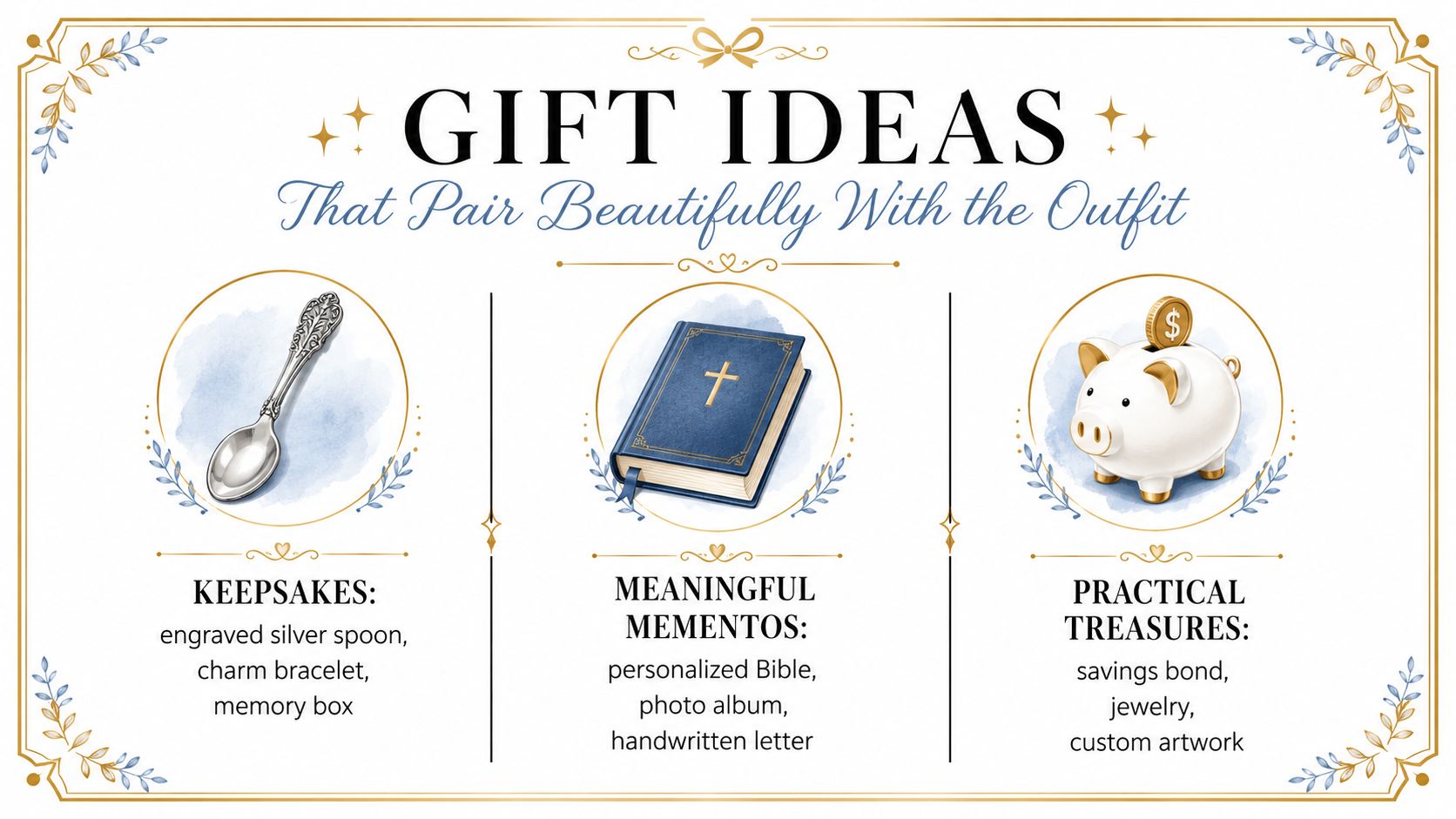
Keepsakes suit godparents and close relatives who want a lasting ceremonial gift. An engraved silver spoon, blessing candle, personalized Bible, handprint kit, or small memory box can mark the occasion without adding another outfit the child may never wear.
Ask the giver to include the baptism date or a handwritten message where appropriate. The inscription matters more than adding elaborate decoration.
Practical gifts that earn their space
Practical gifts suit grandparents, friends, and group purchases. A soft bamboo sleep set, cotton bodysuits, a monogrammed blanket, or a backup romper will get used long after the ceremony. A backup outfit is particularly thoughtful because it solves a problem parents often discover only after a spill or diaper leak.
A coordinated blanket can also serve three jobs: warmth in a cool church, a clean surface during photographs, and a keepsake for later. Choose one that feels soft and washes easily.
Meaningful giving and experiences
Some families would rather receive an experience or charitable gift than another object. A donation in the child's name, a plant for a naming-day tradition, or a framed family portrait session can become part of the child's story without filling a drawer.
A useful request for gift-givers: Contribute toward one meaningful garment upgrade, then pair it with a handwritten note or family keepsake.
This approach works across different budgets because the gift can be small and personal or shared among several relatives. The outfit remains the anchor, while the supporting gift reflects the family's faith, relationships, and practical needs.
For more coordinated inspiration, browse these Christian baby gift ideas. Choose something the family will use or preserve, not something that creates another obligation on an already busy day.
Pulling It All Together on Baptism Day
Choose the outfit by answering three questions. Can my toddler stay comfortable in it? Can I change a diaper without removing everything? Does it fit our family's sense of tradition? If the answer is yes to all three, you're close.
For most active toddlers, my clear plan is a breathable romper or soft two-piece set in white, cream, or a quiet neutral. Add a light cardigan if the church is cool, grippy socks or soft-soled shoes, and one simple accessory your child has already practiced wearing. Skip the stiff collar, trailing hem, and decorative pieces that need constant supervision.
Check the basics before you buy: skin-friendly fabric, a correct fit, smooth seams, secure snaps or a reliable zip, and OEKO-TEX certification when available for the full skin-contact construction. If you choose an heirloom gown, add a comfortable underlayer and make sure the diaper opening is genuinely usable.
The outfit is a backdrop to the baptism, not the meaning of it. Your toddler may fuss, spill water, refuse the bow tie, or look away from every camera. Those moments won't ruin the day. They'll become part of the family story.
Afterward, launder the garment gently according to its care instructions, let it dry completely, and store it in a breathable, dry place if you want to pass it on. The best baptism outfit is the one that helps everyone stay present.
Little Venture Co. offers faith-inspired bamboo zip rompers, two-piece sets, daywear, and accessories for babies and toddlers, with materials described as OEKO-TEX Standard 100 certified. Visit Little Venture Co. to find a soft base layer or practical second outfit that can make baptism day calmer and remain useful afterward.