

Baby Clothes from Grandpa: A Thoughtful Gifting Guide
You're standing in the baby aisle with a tiny outfit in one hand and far too many choices in front of you. The slogan is funny, the print is adorable, and the matching hat looks irresistible. Then you remember what new parents need at two in the morning: fabric that feels gentle, snaps that work quickly, and a size the baby can wear now.
That's the standard for baby clothes from grandpa. A thoughtful gift shouldn't be chosen only for the photograph when the wrapping comes off. It should survive washing, fit without guessing, and become the outfit parents reach for when the day is busy. Sentiment matters, but comfort and safety decide whether sentiment gets worn.
A Grandpa's First Walk Down the Baby Aisle
The baby aisle has changed since your own children were small. There are zip rompers, bamboo sleepwear, coordinated sets, embroidered bodysuits, faith-inspired prints, and enough tiny accessories to outfit a nursery bear. It's easy to grab the item that makes you laugh first.
Resist that first impulse for a moment. Hold the garment as a parent would, not as a grandpa admiring it on a hanger. Can one tired hand open the snaps? Does the neckline stretch without pulling over the baby's face? Are the seams smooth, or can you feel a ridge that might rub delicate skin?
The clothes parents use repeatedly are usually quiet winners. They have soft fabric, practical closures, sensible sizing, and uncomplicated care instructions. A cute message helps, but it can't rescue a scratchy seam or a sleeper that takes too long to fasten during a nighttime change.
Grandpa's buying rule: Choose the garment that makes a parent's routine easier, then add the sentimental detail.
A gift also carries a message beyond its price. It says you've noticed what this family needs. You're not just buying something small because the baby is small. You're choosing an item that supports feeding, naps, visits, laundry, photographs, and all the ordinary moments that create family memories.
If you're buying for a first-time grandparent as well as a baby, practical guidance such as this first-time grandparent gift guide can help you think beyond novelty presents. The same principle applies here: useful gifts often become the most treasured because they remain part of daily life.
Start with three questions. Is the fabric comfortable? Is the construction secure? Is the size based on the baby's body rather than your guess about the future? Once those answers are clear, you can choose a message, color, or family detail with confidence.
Choosing Fabrics and Safety Certifications That Matter
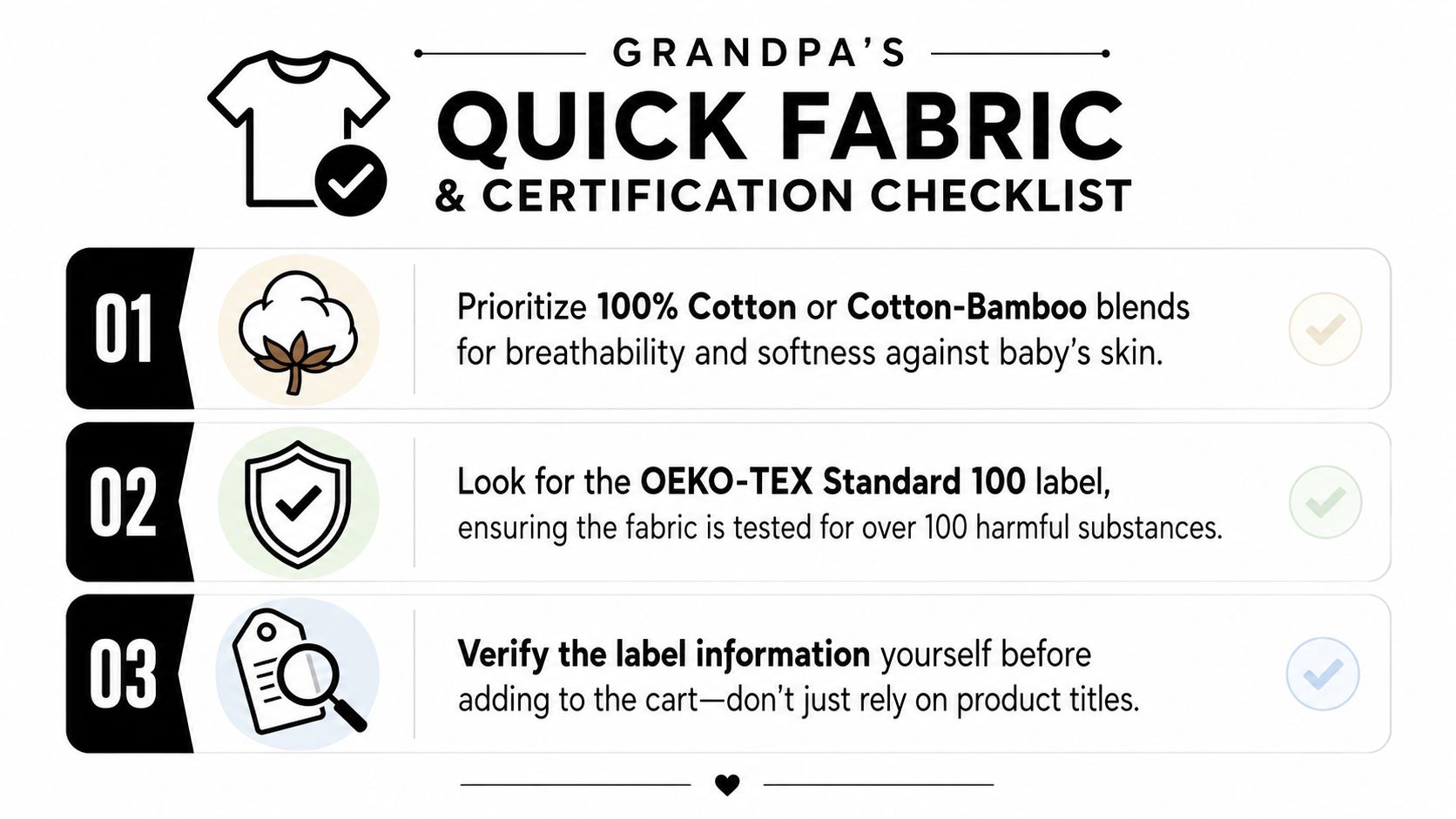
Fabric should be your first filter, not the slogan on the front. 100% cotton, cotton-bamboo blends, and soft bamboo viscose are common choices for baby apparel because they can feel breathable and gentle against skin. A fabric name alone isn't enough, though. The finished garment still needs careful construction and a reliable care label.
Look for a recognized material-safety signal such as OEKO-TEX Standard 100. The certification concerns testing for harmful substances, so it gives shoppers more useful information than a vague phrase such as “natural feel” or “premium quality.” You can learn how the certification works through this explanation of what OEKO-TEX Standard 100 means.
The thirty-second inspection
You don't need to be a textile specialist. Turn the garment inside out and run your fingers along the side seams, neckline, cuffs, and leg openings. Reject anything that feels rough, bulky, or unfinished.
Then check the label and the product description for:
- Fiber content: Favor clearly identified cotton or bamboo-based fabric over an unexplained “soft blend.”
- Certification details: Look for the OEKO-TEX Standard 100 mark or another verifiable safety statement, not just a badge in a product photo.
- Seam finish: Flat or low-profile seams are more comfortable than thick ridges.
- Neck label: Tagless designs or printed labels can reduce rubbing.
- Closures: Snaps should fasten securely and open smoothly without sharp edges.
- Color and finish: Skip garments with a strong chemical odor or embellishments that feel stiff.
Organic cotton and bamboo aren't competing magic words. Organic cotton may appeal to families who prioritize farming and fiber choices, while bamboo-based fabrics are often selected for their smooth hand feel. Judge both by the actual garment, its stitching, its wash instructions, and the baby's skin response.
Care products matter, too. If the household has eczema concerns or fragrance sensitivities, parents may appreciate a resource that helps them find hypoallergenic cleaning products for the broader laundry routine. Ask before adding detergent to the gift, since families often already have a product they trust.
A certified fabric with poor construction still makes a poor present. Feel the inside, read the tag, and inspect the closures before you pay.
Getting the Size Right by Weight Instead of Age
Age labels are convenient, but they're a weak basis for gifting. Babies grow at different rates, and a “three-month” label doesn't tell you enough about the child's weight or length. The better approach is to ask the parents for the baby's current measurements or recent clothing size, then compare that information with the brand's chart.
For gift buying, the practical sweet spot is usually 0–3 months or 3–6 months rather than newborn. Independent size guidance commonly places 0–3 months around 7–14 pounds and 3–6 months around 12.5–18 pounds, while newborn sizing may end around 8–10 pounds. These ranges vary by brand, so use the chart supplied with the actual garment. Babylist's baby clothing gift guidance also emphasizes weight and length over age labels.
| Size Label | Weight Range (lbs) | Age Range (printed on tag) | Typical Wear Time |
|---|---|---|---|
| Newborn | Up to about 8–10 | Newborn | Often brief, depending on the baby |
| 0–3 months | About 7–14 | 0–3 months | Useful early rotation size |
| 3–6 months | About 12.5–18 | 3–6 months | Often practical for continued wear |
A sensible size plan
If you know the baby's current weight, buy one outfit in the current range and one in the next range up. Don't fill the gift with clothes several sizes ahead. Parents may forget them, seasons may change, or the proportions may not work even when the weight label looks right.
Choose forgiving details when you're uncertain. Fold-over cuffs can protect little hands, expandable necklines make dressing easier, and adjustable snaps can give a garment more useful life. A little room is reasonable. Excess fabric in the sleeves, torso, or legs can make movement awkward and may create safety problems.
The baby clothing size chart is useful when you're comparing labels across brands. Still, the parents' latest information beats any general chart. Ask a simple question before ordering: “What weight range fits the baby comfortably right now?”
Adding Sentimental and Faith-Inspired Touches That Still Feel Wearable
A grandpa's message belongs on the garment only if the baby can wear the garment comfortably. “Loved by Grandpa,” a family nickname, or a short blessing can turn an ordinary bodysuit into something personal without making it too precious for everyday use.
Placement matters. A small design on the lower front, side, back, or hem is less likely to rub against the chest or interfere with layering. Avoid putting raised embroidery or a heavy transfer directly where the baby's skin will press during sleep, feeding, or cuddling.
Personalization that earns its place
Inspect every decorative element as carefully as the fabric. Don't choose loose buttons, beads, rhinestones, metallic threads, stiff appliqués, or any raised part that could detach. Prints should feel smooth and secure, and embroidery should have a soft backing rather than scratchy thread exposed on the inside.
Turn the garment inside out before washing. That small habit protects printed and embroidered surfaces, while the care label tells you whether the fabric can tolerate warm water, tumble drying, or other treatment.
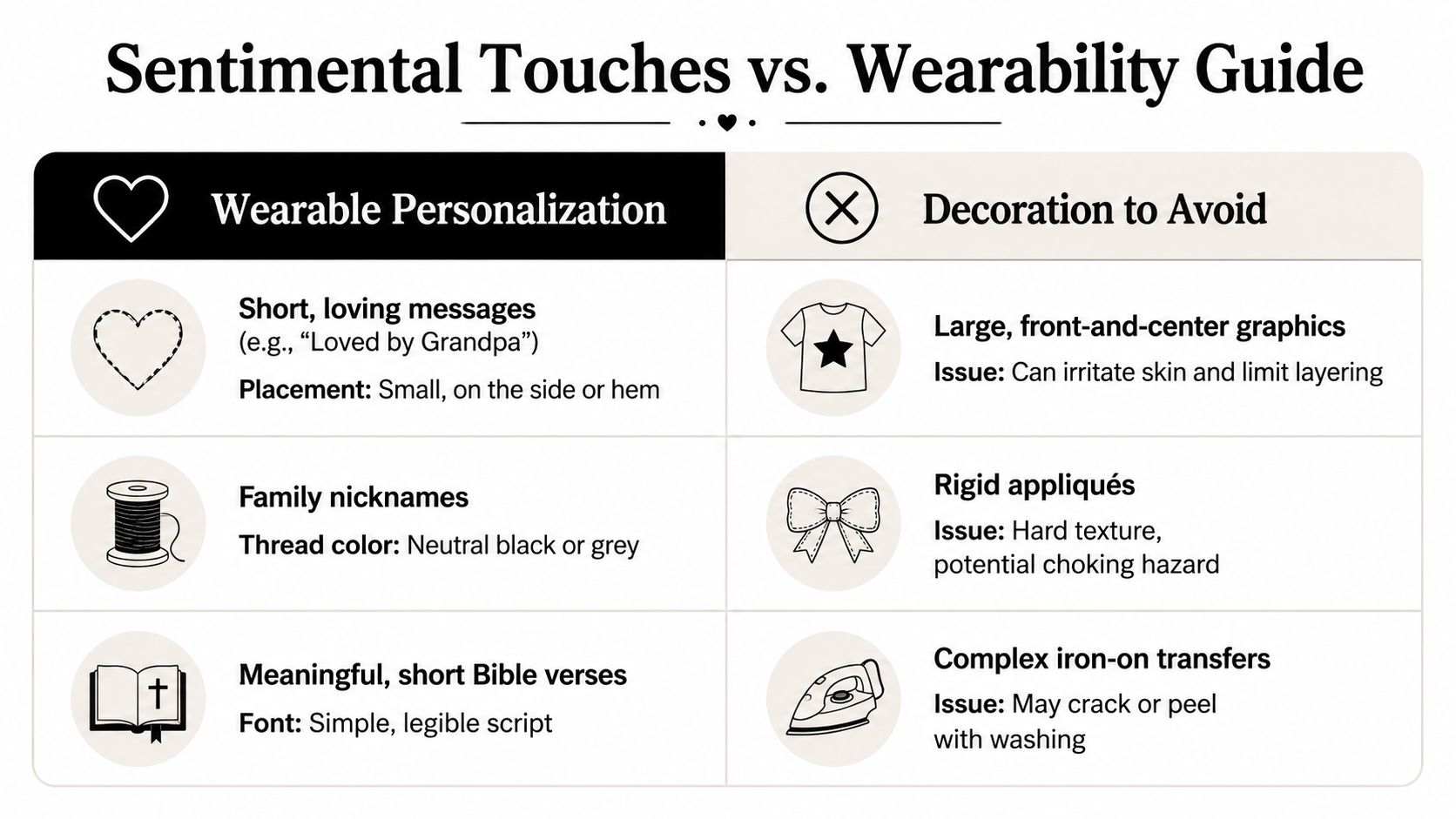
Faith-inspired clothing can be especially meaningful when it remains simple. A brief verse about love, blessing, or family works better on a soft, timeless design than on a large statement that limits when the outfit feels appropriate. Check with the parents before choosing specific wording, particularly when relatives have different traditions or preferences.
A keepsake should still be clothing first. If parents can't comfortably put it on the baby, the message won't get the chance to become a memory.
A coordinated set can make the gift feel complete without piling on decoration. You can compare practical options in these baby bundle sets, then choose one personalized piece and keep the companion garments plain. For a softer non-clothing addition, minky gift ideas at On Pins offer another way to add warmth without covering the baby's outfit in embellishment.
The strongest sentimental gift is worn, washed, photographed, and worn again. Make the emotional detail small enough that comfort remains the main feature.
Matching the Gift to the Occasion
The occasion should guide the outfit, but the baby's likely stage should guide the size. A baby shower gift needs versatility. A first Christmas gift can be festive while remaining soft and washable. A baptism, christening, or dedication outfit needs a neat appearance without becoming stiff or difficult to layer.
For a shower, choose several practical pieces rather than one elaborate costume. Soft bodysuits, footed sleepers, and a receiving blanket give parents options across changing temperatures and routines. Include more than one size when the parents provide current measurements, but keep the sizes close enough that the clothing has a realistic chance of being used.
| Occasion | Best Clothing Choice | Buying Tip |
|---|---|---|
| Baby shower | Soft bodysuits, footed sleepers, receiving blanket | Ask for current weight and choose useful nearby sizes |
| First Christmas | Breathable cotton pajamas or festive bodysuit | Avoid scratchy trim and detachable decorations |
| Christening, baptism, or dedication | Simple, well-fitting outfit with layering room | Prioritize comfort for photographs and the full service |
| First birthday | Soft outfit with an elastic waistband | Choose clothing that allows sitting, crawling, and play |
A Christmas outfit doesn't need a complicated costume. A breathable sleeper or comfortable bodysuit with a modest seasonal print will get more use than something covered in rigid trim. Keep hats and accessories optional, since babies often remove them quickly and parents may not want extra pieces to track.
For a religious ceremony, choose a garment that looks tidy without restricting movement. Soft layers can make the outfit work across indoor temperatures, and a simple design is more likely to coordinate with a family blanket or heirloom accessory.
A first-birthday outfit has a different job. The baby may spend the celebration sitting, crawling, reaching, or eating, so an elastic waistband and washable fabric matter more than formal styling. Choose a color that works with clothing the parents already own.
Seasonal planning should stay practical. Warm-weather gifts call for breathable layers, while colder months favor several soft pieces instead of one bulky item. Keep the tags and wrapping separate from the clothing, and write the weight-based size and care instructions on the gift note so parents don't have to search for them later.
Safety Checks and Easy Care for Daily Wear
Inspect every garment before it reaches the baby. A responsible gift can become inconvenient or unsafe if a snap is loose, a seam is rough, or a decorative piece starts peeling after the first wash.
The U.S. Consumer Product Safety Commission defines infant garments by size and sets technical requirements for certain infant apparel, while tight-fitting sleepwear has separate flammability requirements. You can review the relevant guidance in the CPSC information on infant tight-fitting garments. Oversized clothing can also increase trip-and-fall concerns for mobile children, so fit should match the child's current stage.
The home check
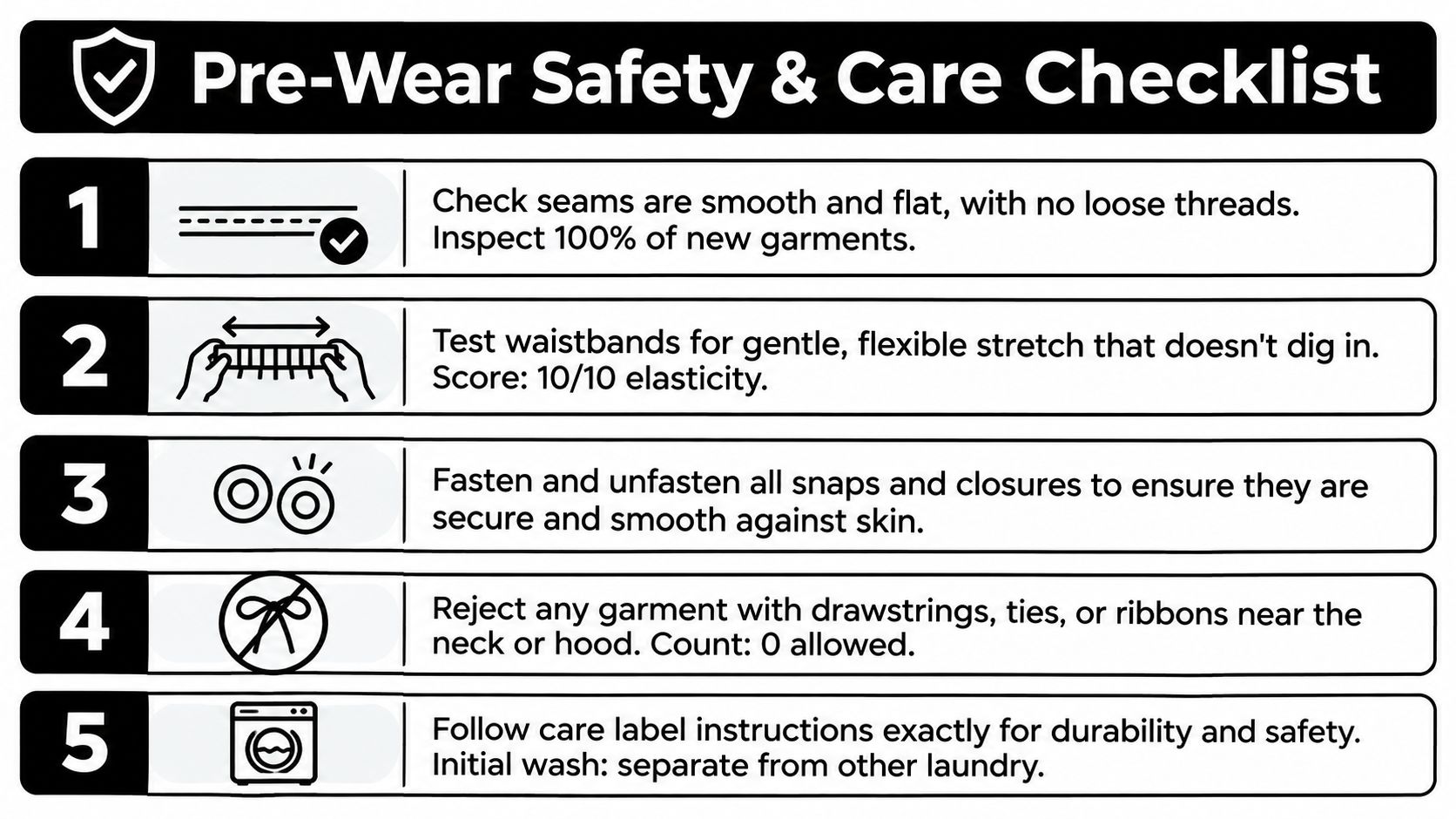
Use this quick inspection before wrapping the present:
- Run your fingers over seams: Look for flat finishes, loose threads, and rough edges.
- Stretch the waistband gently: It should move without digging into the baby's skin.
- Test every closure: Fasten and release snaps, zippers, and other closures to confirm they're secure.
- Remove risky details: Avoid neck drawstrings, hood cords, ties, ribbons, loose buttons, sequins, and small detachable parts.
- Read the labels: Confirm the size, fiber content, and care instructions are clear.
Wash the clothing according to its care label before use if the parents prefer receiving prewashed items, or tell them it needs washing before the baby wears it. Use a fragrance-free, baby-safe detergent already approved by the household. Close snaps and turn printed or embroidered pieces inside out to reduce wear.
Wash similar colors together, avoid fabric softener if it irritates the baby, and don't use high heat unless the label allows it. Air-drying can help limit shrinkage. After washing, inspect the elastic, snaps, seams, and print again.
This short video offers a visual reminder of practical baby clothing safety considerations:
Retire anything with fraying seams, damaged closures, stretched fabric, or peeling decoration. Daily clothing earns its value through repeated safe use, not by remaining perfect in a drawer.
The Real Gift Behind the Outfit
Many grandpas buy larger sizes because they want the present to last. That sounds sensible, but it often misses the moment that matters. A garment that's too large may be uncomfortable, awkward to layer, or forgotten before the baby reaches it.
The better gift arrives in the right weight range, feels gentle against skin, and stands up to regular laundering. A washable outfit worn every week creates more connection than a novelty piece saved for an uncertain future.
Baby clothing also sits inside a substantial retail category. The global baby apparel market was estimated at USD 177.1 billion in 2023 and is projected to reach USD 248.25 billion by 2030, with a projected compound annual growth rate of 4.8% from 2024 to 2030, according to Grand View Research's baby apparel market analysis. In the United States, the baby and young children's apparel market was valued at approximately USD 28 billion in 2024, using the same source. Those figures don't tell you which sleeper to buy, but they do show that a grandparent's purchase belongs to a large, durable clothing category rather than a minor gift niche.
Practical care is a form of love
Grandparents are also a major spending group for children's goods. An AARP-cited survey reported that 96% of grandparents spend money on their grandchildren, with spending tiers that included 25% spending less than USD 250, 25% spending USD 250 to USD 750, and another 25% spending more than USD 1,000. The figures are reported in this AARP-cited discussion of grandparent spending. The lesson is simple: grandparents already play a meaningful role in family purchasing, so the purchase deserves more thought than a last-minute slogan.
Choose neutral colors that coordinate with the parents' existing wardrobe. Pick sturdy snaps, breathable certified fabrics, and a size based on current weight. Then add one faith-inspired or personalized piece if it suits the family.
Little Venture Co. offers bamboo sleepwear and daywear, including zip rompers, two-piece sets, and accessories made with bamboo viscose. Its materials are OEKO-TEX Standard 100 certified, and the company contributes a portion of each sale to Heartbeat International. For a grandpa comparing practical, faith-inspired baby clothes, that combination keeps the focus on comfort, tested materials, and meaningful purpose.
The gift is not the phrase on the chest. It's showing parents that you understand their routine well enough to choose something they'll use tonight, wash tomorrow, and remember you by long after the wrapping is gone.
Visit Little Venture Co. to explore soft, faith-inspired bamboo sleepwear and daywear that can make a thoughtful grandpa gift. Choose the size by the baby's current weight, check the safety details, and give parents an outfit that belongs in their daily rotation.