

Baby Boy Take Me Home Sets: A Parent's Buying Guide
You're standing near the hospital exit with a diaper bag over one shoulder, a car seat waiting in the back seat, and a newborn who has only known the steady warmth of an indoor room. The outfit folded at the top of the bag suddenly feels more important than it did at home. It has to look special in photographs, but it also has to fit beneath a harness, open quickly for a diaper change, and keep your baby comfortable during the first ride.
That's the primary job of baby boy take me home sets. The sweetest print matters, but it comes after fit, fabric, fasteners, and safety information. The newborn and infant age range remains a commercially important part of children's clothing, with infants aged 0–2 years accounting for 32.4% of market share in 2024 in one global estimate, while boys' clothing held 38.4% that year, according to Market.us's children's clothing market analysis. A coming-home set sits right at that high-intent moment, when families are buying for birth, gifting, photographs, and the first days at home.
The First Outfit and Why It Actually Matters
The hospital doors open, someone carries the bags, and one adult usually takes charge of the car seat. Your baby may be asleep, swaddled, or suddenly wide awake. The room outside could feel cooler than the nursery, grandparents may reach in for a first cuddle, and the car seat straps create an awkward puzzle around tiny shoulders and a rounded back.
A regular newborn outfit can be cute and comfortable, but a take-me-home set serves a narrower purpose. It's designed for the transition from hospital to home, where thermal comfort, diaper access, and car-seat compatibility all matter at once. Newborns can't regulate temperature as effectively as older children, so bulky layers can be just as inconvenient as too few layers. A thick coat or puffy outer garment should not sit beneath the harness because it can interfere with a snug fit.

The three jobs of a going-home outfit
A useful set should make three immediate tasks easier:
- Regulation: Choose a breathable base and add warmth over the harness when needed, rather than relying on thick layers under it.
- Changing: Look for snaps, a wrap opening, or a gown-style bottom that lets you reach the diaper without pulling clothing over your baby's head.
- Remembering: A simple hat, coordinated color, or small embroidered detail can make the photographs feel special without adding scratchy decorations.
The outfit may be worn for only a short trip, yet it often becomes part of the family's memory box. That doesn't mean you need a perfect look or an expensive bundle. As this guide to take-me-home newborn outfits emphasizes, comfort and keepsake appeal can coexist when the design stays uncomplicated.
Practical rule: The set has to pass the car-seat test first. If it photographs beautifully but bunches under the straps, has a stiff neck opening, or requires complicated dressing, it isn't the right day-one outfit.
Pack the set near the top of the hospital bag, preferably washed and assembled with the diaper, blanket, and any weather-appropriate outer layer. You're not dressing for a catalogue. You're making one tiring, emotional transition a little easier.
Three-Piece, Four-Piece, or Gown Set
Set counts can be confusing because brands don't always define a “piece” in the same way. One listing may count a hat as a separate item, while another may bundle accessories that you won't use during the ride home. Compare the actual garments, not the number printed in the product title.
The practical differences
A three-piece set commonly includes a bodysuit or top, pants, and hat. It's often the cleanest choice for a mild-weather discharge because it provides a complete look without creating a pile of accessories. Shoulder snaps or a wide neck make the top easier to put on, while soft pants allow the harness to sit over a relatively smooth layer.
A four-piece set adds something such as a cardigan, footie, mittens, or blanket. That extra layer can help when the weather is cold or the trip home is long, but it may be unnecessary for a warm day. Check whether the fourth item is a useful garment or just a decorative add-on.
A gown-style set replaces separate pants with an open or gathered bottom. This is especially convenient during the first nights, when a caregiver needs quick access for diaper changes and doesn't want to guide little legs through narrow openings. The trade-off is less defined leg coverage and a look that may feel less structured in photographs.
| Format | Typical Contents | Best For | Trade-Off |
|---|---|---|---|
| Three-piece | Top or bodysuit, pants, hat | Mild weather and simple dressing | Offers less built-in warmth |
| Four-piece | Three-piece base plus a cardigan, footie, mittens, or similar layer | Cooler discharge days or extra flexibility | The added item may be redundant |
| Gown set | Gown-style top with an elasticated or gathered bottom, sometimes with a hat | Fast diaper changes and nighttime practicality | Less leg coverage and a looser silhouette |
When more isn't better
Extra pieces help when they solve a specific problem. A cardigan that goes over the harness, for example, can be useful in cold weather. A second decorative hat may not be. The same applies to mittens. They can help if your baby's nails are sharp, but they're not essential for every discharge.
A well-chosen two- or three-item base can be more useful than a crowded bundle full of pieces you never reach for.
Look for the closure style, fabric weight, and access points before you count accessories. A simple set that can be put on while your baby is sleepy often beats a larger set that requires several layers and careful arranging.
What OEKO-TEX Class I Really Means
The word bamboo describes a fiber source, not a complete safety standard. The same is true of terms such as “natural,” “premium,” or “hypoallergenic” when a product page doesn't explain how the finished garment was tested.
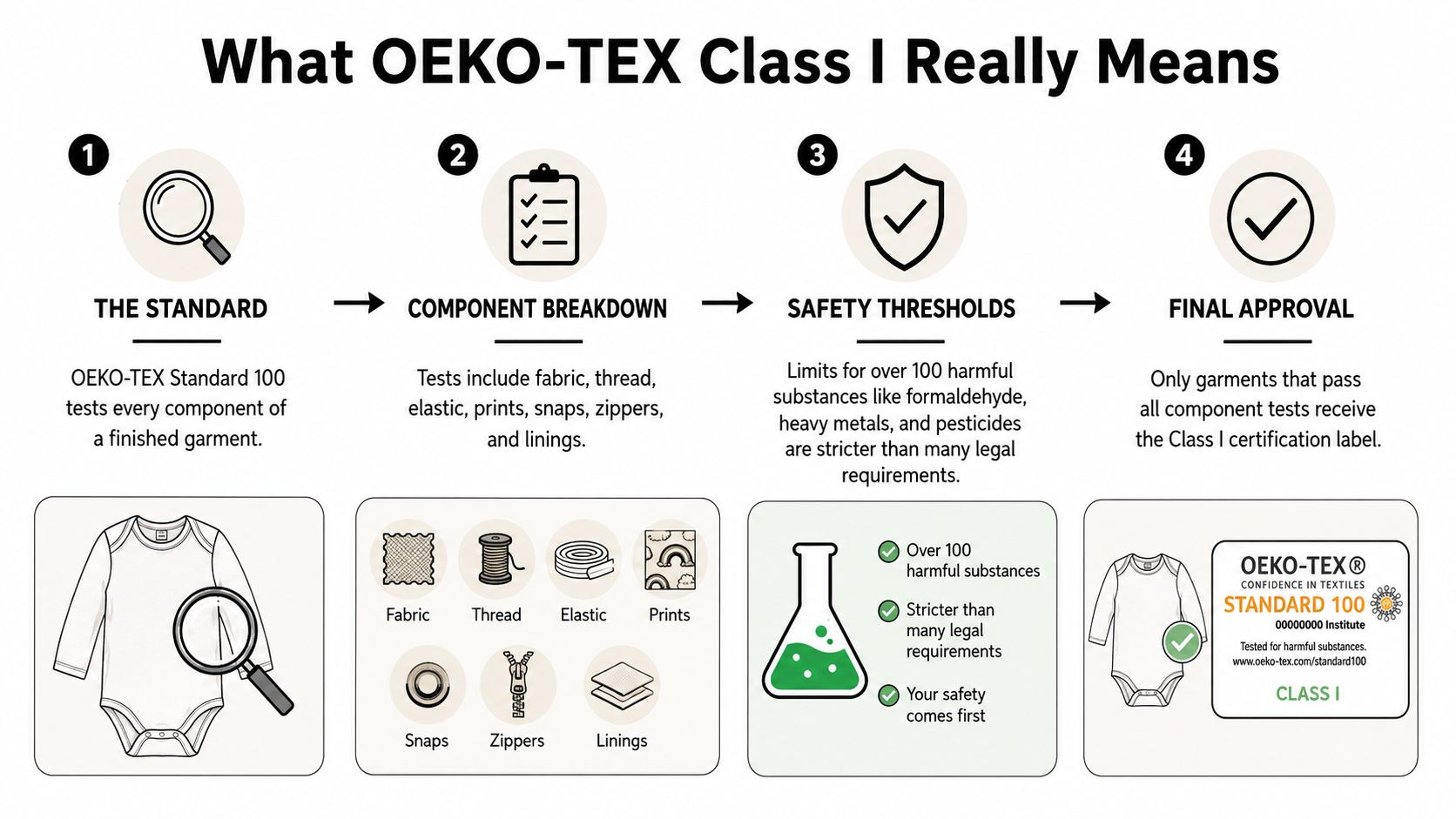
OEKO-TEX Standard 100 Class I is the clearest certification signal for infant clothing because it's the strictest product class for items intended for babies and children up to 36 months, as described in this guide to bamboo baby pajama safety. The testing applies to the finished product, not only the main fabric. That distinction matters because a baby's skin touches more than the body of the garment.
What the certification checks
A finished take-me-home set may include fabric, thread, elastic, printed designs, snaps, zippers, and lining materials. Standard 100 testing considers the components together and screens for harmful residues and substances that can be restricted in infant products, including:
- Formaldehyde and heavy metals
- Certain phthalates
- Allergenic dyes
- Pesticide traces and dye byproducts
Infant skin has a higher surface-area-to-body-mass ratio and can be more vulnerable to irritants. A Class I certificate doesn't promise that every baby will tolerate every fabric, but it gives you a stronger, verifiable control point than a soft-sounding marketing phrase.
What to look for on a product page
Search for a clearly displayed OEKO-TEX Standard 100 Class I reference rather than a vague “tested” statement. A trustworthy listing should make it possible to identify the certificate number, testing institute, and validity information. If the page only shows a logo without any supporting details, ask the seller for verification.
OEKO-TEX isn't the same as GOTS organic certification. One addresses textile safety testing, while the other relates to organic fibers and processing requirements. A garment can carry one, both, or neither. The key point is that cotton or bamboo alone doesn't establish chemical safety.
For a deeper explanation of the standard, this overview of OEKO-TEX Standard 100 can help you interpret the label before you buy. Certification should support your decision, not replace checking seams, fit, fasteners, and your baby's individual skin response.
Bamboo Viscose and Cotton Compared
Newborn life is messy. Spit-up, milk dribbles, diaper leaks, and frequent washing test a garment more thoroughly than a product photograph ever can. Bamboo viscose and organic cotton can both be comfortable choices, but they behave differently in a baby's first outfit.
Bamboo viscose is often chosen for its smooth feel, breathability, and moisture-management properties. Those qualities can feel pleasant during a warm car ride or skin-to-skin contact. However, the final experience depends on the knit, finishing process, dyes, and construction. A bamboo label doesn't tell you whether the garment has been tested for residues.
Organic cotton generally offers a more structured feel and can tolerate a demanding laundry routine well, depending on its construction. It may be a better fit for families who want a sturdier set, especially if it includes embroidery or appliqué. Neither fiber is automatically safer than the other. Certification and manufacturing quality matter more than the fiber story alone.
| Attribute | Bamboo Viscose | Organic Cotton |
|---|---|---|
| Softness | Smooth, fluid, and often cool against the skin | Soft, with a more familiar natural hand-feel |
| Moisture handling | Valued for breathability and wicking behavior | Breathable, though the result varies by weave or knit |
| Wash durability | May need gentler care to preserve softness and shape | Often holds structure well through regular washing |
| Design performance | Drapes neatly but may feel less structured | Supports embroidered or appliquéd details well |
| Safety signal | Fiber name alone proves nothing about residues | Organic wording alone proves nothing about residues |
| Best buying check | Look for infant-grade certification and clear care instructions | Look for infant-grade certification and durable construction |
Choose for the laundry you'll actually do
If you prefer a silky, lightweight layer and can follow gentler care instructions, bamboo viscose may suit your routine. If you expect frequent washing, warmer cycles, or a keepsake design with structured details, cotton may feel easier to maintain.
The most reliable combination is a comfortable construction plus verified testing. This comparison of organic cotton and bamboo offers further context, but the final decision should rest on the garment in front of you. Run your fingers over the seams, check for rough labels, and inspect the snaps. Softness is useful. It isn't the whole safety assessment.
Sizing by Birth Weight and Season
Newborn sizing is less predictable than the label suggests. A baby can be born at term and still need a preemie cut, while a larger newborn may be more comfortable in the next size immediately. Weight helps, but length and shoulder width can change the fit just as quickly.
A realistic starting point
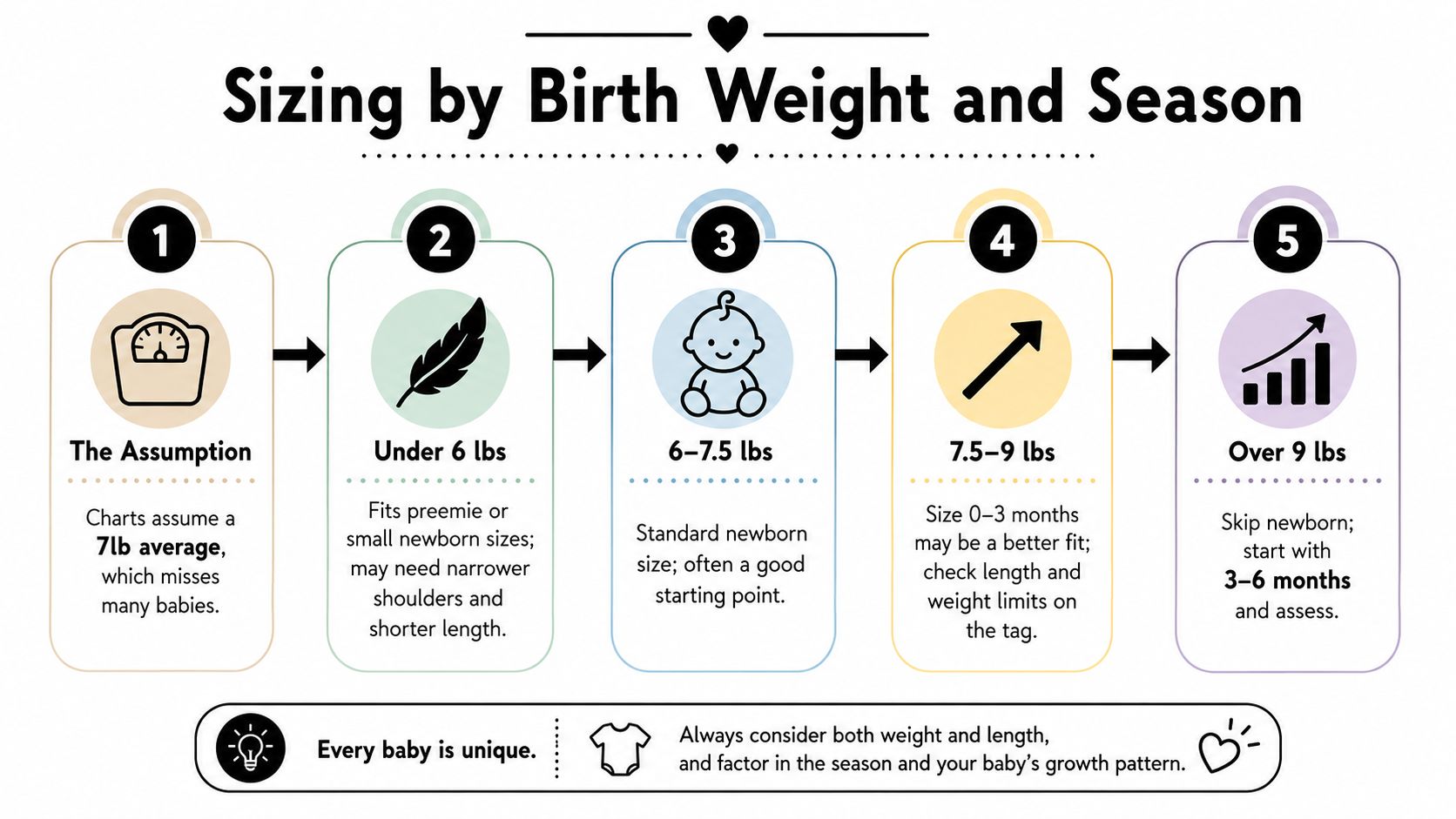
Use the following as a practical guide, then compare the garment's own measurements:
- Under 6 lb: A preemie or small-newborn cut may fit better, particularly around the shoulders and torso.
- 6–9 lb: Standard newborn sizing is often a reasonable starting place.
- 9–12 lb: A 0–3-month option may offer more room, especially if the garment runs short.
The supplied baby clothing size chart guidance is useful for checking brand-specific limits. Don't rely on age alone because a newborn's length can make a width-based fit misleading. A tall baby may outgrow the torso before the garment looks tight across the chest.
Let the season change the outfit, not the harness fit
For a cold-weather discharge, use a thinner base layer beneath the harness and add warmth over the secured straps with a blanket or suitable outer layer. A bulky snowsuit underneath the harness can create extra space that you can't see. For a warm-weather trip, a single breathable layer may be enough, and a hat may be unnecessary indoors or in a warm car.
Check the neck opening before the birth if possible. A wide opening or shoulder snaps can make a slightly roomy garment manageable, while a narrow pullover can be difficult even in the correct size.
If you're close to a size boundary, sizing up usually gives your family more flexibility than choosing a garment that may be outgrown immediately. Still, don't size so generously that the neckline, sleeves, or legs interfere with safe positioning.
Faith-Inspired Designs as Meaningful Gifts
A coming-home outfit is one of the first pieces of clothing a family photographs with the baby. For Christian families, a small cross, a “blessed” detail, or a carefully chosen scripture reference can give that photograph an added layer of meaning. The design doesn't need to be loud. Sometimes a quiet embroidered symbol on a soft set feels more personal than a large slogan.
These outfits can be especially thoughtful gifts from grandparents, godparents, church friends, and family ministry groups. The recipient gets something practical for the newborn, while the design acknowledges the family's faith and the significance of welcoming a child. That balance makes the gift feel more considered than a decorative item that sits unused.
Match the message to the family
Faith-inspired clothing works best when you know the parents' traditions and preferences. A neutral color with a small detail may be suitable for a baby shower, while a more explicit verse or coordinated parent-and-baby design may fit a close relative's gift. If you're unsure, choose comfort and simplicity first, then add meaning through the card.
Coordinated sibling or parent-and-baby options can also make gifting easier for church groups and relatives who want a connected look. Just check that the baby piece remains practical, with soft seams, accessible closures, and no stiff decoration against the skin.
A handwritten note can make the set feel personal without turning the gift into a sales message. Include a verse the family already loves, a short prayer for the child, or a sentence about the joy of meeting him. For a non-religious recipient, a soft, well-made layette can still be appreciated as clothing, while the card gives them room to receive the gesture in their own way.
Care That Keeps the Set Soft and Safe
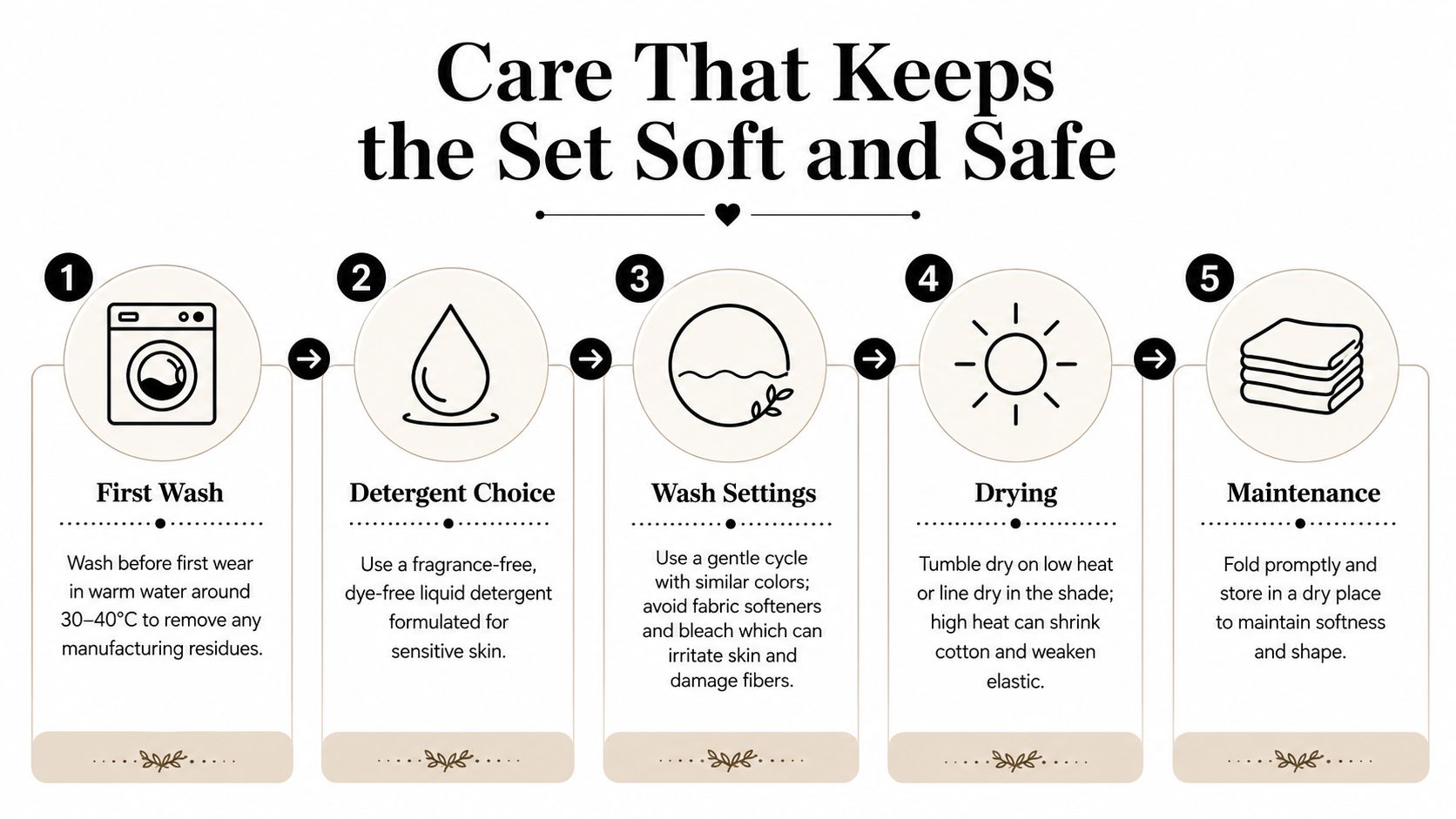
Wash the outfit before the first wear. A first wash removes dust and manufacturing residues, while also letting you discover whether the fabric shrinks, the snaps loosen, or the neckline becomes difficult before your baby is wearing it on discharge day.
Use a fragrance-free, dye-free liquid detergent made for sensitive skin. Fabric softeners and dryer sheets can coat fibers, affect absorbency, and add fragrances that some babies don't tolerate well. Follow the garment label if it differs from your usual routine, especially for bamboo viscose or decorated pieces.
A low-effort routine that protects the garment
- Wash first: Use warm water around 30–40°C when the care label allows it.
- Choose detergent carefully: Pick a fragrance-free, dye-free liquid formula for sensitive skin.
- Protect details: Fasten snaps and hooks, turn embellished garments inside out, and use a mesh laundry bag for delicate knits.
- Dry gently: Tumble dry on low or lay flat. High heat can shrink fabric and affect elastic.
- Store thoughtfully: Fold the set when it's completely dry and keep it away from direct sunlight.
Separate baby clothing from adult loads during the early months if that makes it easier to control detergent and fragrance exposure. You don't need a complicated system. The goal is to reduce residue, friction, heat, and stretching.
Keep certification in perspective
OEKO-TEX testing concerns the garment and its components at the time of assessment. It doesn't mean the set never needs washing, and it doesn't override the care label. Gentle laundering helps preserve the fabric's feel, shape, and useful life after the first ride home.
Inspect the outfit after each wash. Discard or repair anything with loose threads, damaged snaps, stretched elastic, or roughened areas. A safe first outfit should remain safe when it becomes a regular outfit, a sibling hand-me-down, or a keepsake.
Your Quick Decision Checklist
At checkout, make the decision in this order. It keeps the adorable details from distracting you from the things that affect day one.
Start with the format
Choose a three-piece set if you want simple dressing and mild-weather flexibility. Choose a four-piece option when the added layer solves a real warmth or travel problem. Choose a gown when quick diaper changes matter more than defined leg coverage.
Then inspect how the set opens. Shoulder snaps, a wrap front, or a wide neck can make dressing easier. A footed bottom or soft leggings can provide coverage without adding a bulky layer, while a hat should stay comfortably in place rather than slide over your baby's face.
Check the safety evidence
Look for OEKO-TEX Standard 100 Class I, not merely “bamboo,” “organic,” or “hypoallergenic” wording. Confirm that the product page identifies the certification clearly and covers the finished garment's components. Fabric, trims, snaps, prints, and elastic all matter because they can touch your baby.
Match the size to the likely baby
Use estimated birth weight, expected length, and season rather than age alone. A preemie cut may be useful for a smaller baby, standard newborn sizing may suit a baby in the middle range, and a larger newborn may need the next size from the start. If you're close to the boundary, a little extra room is usually more useful than a tight fit, provided the neckline and sleeves remain secure.
Consider who's giving it
For a baby shower, neutral colors and a simple silhouette are usually versatile. Grandparents, godparents, and church groups may prefer a faith-inspired design that marks the child's welcome. If you're buying for someone else, include a gift receipt or confirm the size, since newborn proportions vary widely.
Finally, judge the set by the hospital exit and car seat, not only the photograph. Look for smooth seams, accessible snaps, breathable fabric, and a construction that can survive repeated washing. The outfit may appear in one important picture, but a well-made set can return for early visits, quiet mornings, and future keepsake moments.
Little Venture Co. offers faith-inspired bamboo viscose rompers, two-piece sets, and accessories for babies and toddlers, with materials tested to OEKO-TEX® Standard 100. Visit Little Venture Co. to find a soft, meaningful outfit for a coming-home moment, baby shower, or family gift.