

A Parent's Guide to the Best Quality Baby Clothes
When you're picking out baby clothes, it’s about so much more than just finding a cute outfit. The best quality baby clothes are a trifecta of soft, safe materials (like bamboo viscose and organic cotton), tough stitching that lasts, and clever designs that make a parent's life easier.
It's all about comfort, safety, and a dose of practicality for your little one's delicate skin and your sanity.
Why Finding Quality Baby Clothes Matters
Let's be real—walking into a baby store or browsing online can be completely overwhelming. You're hit with a tidal wave of adorable, tiny outfits, but what actually separates the good stuff from the fast-fashion fluff? True quality is a mix of things that directly affect your baby’s comfort and your day-to-day life.
And this isn't just a small niche concern. The baby clothing market is massive—valued at around USD 227 billion in 2024 and expected to hit USD 350.3 billion by 2033. This boom shows that parents everywhere are starting to demand better: safer, longer-lasting, and more thoughtfully designed clothes for their kids.
More Than Just Fabric
So, what are we actually looking for? The best baby clothes are made with both the baby and the parent in mind. It's about finding those pieces that keep your little one cozy and safe while making your job just a little bit simpler.
Think about the difference. A cheap, flimsy onesie might start to unravel after a couple of washes, irritate sensitive skin with rough fabrics, or have a snap pop off in the middle of a 3 a.m. diaper change. We've all been there.
A high-quality piece, on the other hand, delivers on multiple fronts:
- Superior Comfort: Premium fabrics feel incredible and are super gentle on a baby's delicate skin.
- Enhanced Safety: No harsh chemicals or scary choking hazards. Just peace of mind.
- Long-Lasting Durability: These are the clothes that can survive the wash cycle again and again… and again.
- Practical Functionality: Smart features, like two-way zippers, are a game-changer for diaper changes.
Choosing quality is an act of care. It’s about wrapping your baby in the best materials possible, ensuring their first experiences with the world are soft, safe, and comfortable.
This guide is here to help you see past the cute patterns and price tags to what really matters. And if you're ever looking for ideas, checking out some thoughtful gifts for new parents often reveals how much they appreciate practical, high-quality items that make their lives easier.
1. Let's Talk Fabric: The Foundation of Quality Baby Clothes
When you’re on the hunt for the best baby clothes, your first stop should always be the fabric tag. It’s simple: the material is what’s resting against your baby's brand-new, delicate skin all day and night. Think of it like building a house—if the foundation isn't right, the rest doesn't really matter.
Two fabrics have become the gold standard for top-tier baby apparel: bamboo viscose and organic cotton. Both are fantastic choices, but they feel and perform differently. It’s kind of like choosing between a silky, luxurious robe and your favorite soft, worn-in t-shirt. Let's break down what makes each one special.
The Buttery Softness of Bamboo Viscose
If you’ve ever touched a bamboo baby onesie, you know what I’m talking about. It’s that famously buttery-soft, almost cool-to-the-touch feel. Wrapping your baby in bamboo viscose is like giving them a gentle, silky hug. The fabric drapes beautifully and has an incredible smoothness that glides over skin, which is a huge win for little ones with irritation or eczema.
But it’s not just about that luxurious feel. Bamboo viscose is a true performance fabric:
- Amazing Temperature Regulation: It’s one of those magical materials that helps keep your baby cool when it’s hot and cozy when it’s cold. Perfect for a little human who can't tell you they're too warm.
- Moisture-Wicking Magic: Bamboo pulls sweat and moisture away from the skin, helping your baby stay dry and comfy. This is a game-changer for sweaty sleepers or during humid summer months.
- Naturally Hypoallergenic: It’s incredibly gentle and far less likely to cause an allergic reaction, giving you some much-needed peace of mind.
This blend of softness and smart features makes bamboo an all-star for everything from pajamas to play clothes.
The Trusted Comfort of Organic Cotton
Organic cotton is the reliable, classic choice for a reason. It’s that familiar, breathable softness we all know and love. But "organic" is the key word here. Unlike conventional cotton that’s often grown with a cocktail of pesticides and finished with harsh chemicals, organic cotton is clean from the very beginning.
That purity is exactly what makes it so perfect for babies. It’s grown without toxic chemicals, making it naturally hypoallergenic and wonderfully gentle. The softness is different from bamboo—less silky, more of a classic, airy comfort that just gets better with every wash.
The big deal with organic cotton is how it’s grown and processed. It’s certified to be free from synthetic pesticides and harsh fertilizers, which means the final piece of clothing touching your baby is as pure as it gets. This commitment to clean materials is a non-negotiable for the best quality baby clothes.
For parents who want serious durability and that timeless, cozy feel, you can’t go wrong with organic cotton. If you really want to geek out on materials, we have a whole guide on finding the best fabric for sensitive skin.
Choosing the right material is the crucial first step. As you can see below, everything else—from safety to design—builds on that foundation of a comfortable, high-quality fabric.
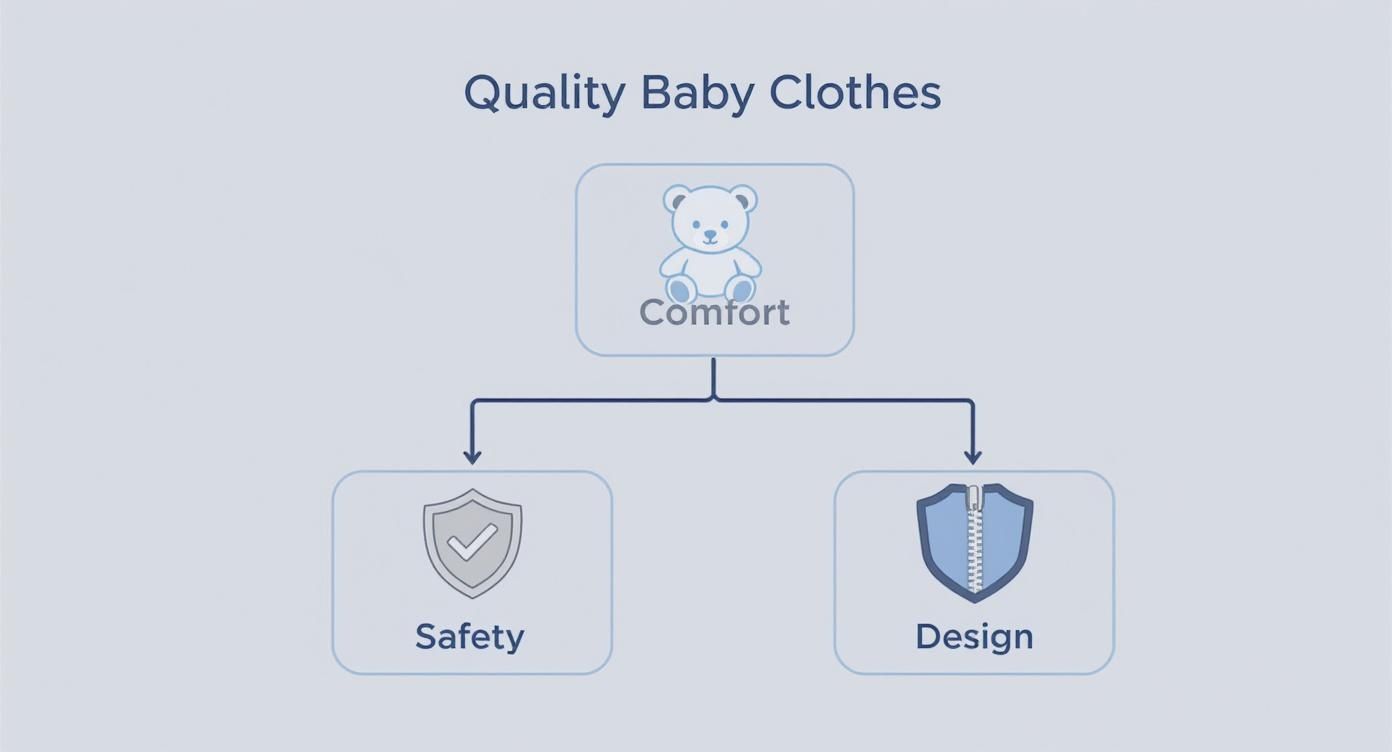
Fabric Showdown: Bamboo Viscose vs. Organic Cotton
So, which one should you pick? It really depends on what you’re looking for. This little side-by-side comparison should help clear things up.
| Feature | Bamboo Viscose | Organic Cotton |
|---|---|---|
| Feel & Texture | Silky, buttery-soft, and drapes smoothly. | Soft, breathable, with a classic cozy texture. |
| Temperature Control | Excellent at regulating temperature—cool in summer, warm in winter. | Breathable and light, but less adaptive than bamboo. |
| Moisture-Wicking | Superior at pulling moisture away from the skin. | Absorbent, but doesn’t wick moisture as effectively. |
| Sensitivity | Ideal for highly sensitive or eczema-prone skin. | Great for sensitive skin, a reliable hypoallergenic choice. |
| Durability | Very stretchy and soft, but can be more delicate. | Extremely durable and often gets softer over time. |
Ultimately, there’s no wrong answer here. If your baby has extra-sensitive skin or you live somewhere with wild temperature swings, bamboo viscose might be your hero. If you’re looking for a durable, classic workhorse that feels like a hug from an old friend, organic cotton is a fantastic bet.
Either way, by choosing one of these two, you’re already giving your baby a much safer, comfier start than conventional fabrics could ever offer.
How to Read Safety and Quality Labels
Walking into the world of baby clothes can feel like trying to decipher a secret code. You're hit with a barrage of labels and certifications, and it's easy to get overwhelmed. But here's a little secret: those labels are your best friend. They’re a shortcut to knowing if a garment is truly safe and well-made, not just cute.
Think of them as a quick background check on your baby’s clothes, confirming you're getting the best quality baby clothes possible. These aren't just fancy marketing stickers; they represent serious, independent testing.
And that testing matters. The baby apparel industry is massive—valued at USD 67.47 billion in 2024 and still growing, according to industry analysis. That growth is being fueled by parents like us who are demanding safer, higher-quality options. Learning to read these labels makes you a part of that powerful movement.
Decoding OEKO-TEX STANDARD 100
You’ve probably seen the OEKO-TEX® STANDARD 100 tag on higher-end baby clothes, and for good reason. It’s one of the most reliable textile certifications on the planet.
Put simply, if a piece of clothing has this label, it’s been tested and cleared of a long list of nasty stuff. We’re talking about over 100 different chemicals, from pesticides and lead to formaldehyde.
And when they say tested, they mean everything. It’s not just a quick scan of the main fabric. They look at every single piece of the garment:
- The Threads: Every stitch is checked.
- The Buttons and Snaps: Inspected to ensure they're free of harmful metals.
- The Zippers: The whole thing, from the pull tab to the teeth, gets analyzed.
- The Dyes and Prints: Tested to make sure they’re completely non-toxic.
This head-to-toe approach gives you total confidence that nothing harmful will ever touch your baby's delicate skin. To get the full picture, you can learn more about what OEKO-TEX Standard 100 actually means in our detailed guide.
Understanding GOTS: The Gold Standard for Organic
The word "organic" gets thrown around a lot, but not all organic claims are the same. Seeing "organic cotton" on a tag is great—it means the cotton was grown without synthetic pesticides. But the Global Organic Textile Standard (GOTS) certification is on a whole other level.
It's best to think of GOTS as the absolute gold standard for anything organic in the textile world.
A GOTS certification doesn’t just verify that the cotton was grown organically. It follows the entire process, from the farm to the finished product, making sure every single step meets strict environmental and social standards.
A GOTS-certified onesie isn't just organic; it's guaranteed to be:
- Genuinely Organic: Made with at least 95% certified organic fibers, with strict rules for the remaining 5%.
- Eco-Friendly: The factories have to use sustainable practices, like treating their wastewater and avoiding toxic dyes.
- Ethically Made: It ensures fair wages, safe working conditions, and absolutely no child labor anywhere in the supply chain.
So when you pick a GOTS-certified item, you're doing more than just buying a safe, high-quality outfit for your baby. You're casting a vote for a system that's better for the planet and for the people who make our clothes. It's a powerful feeling.
Spotting Durability and Smart Design Features
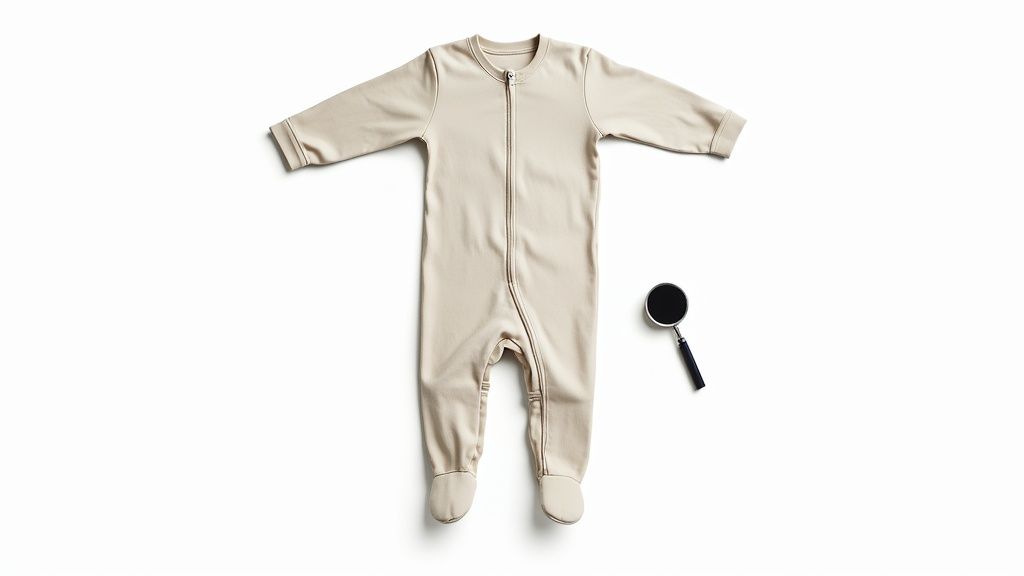
While the right fabrics and safety seals are a huge part of the equation, it's the little construction details that really show you if a garment can handle real baby life. The best quality baby clothes are built to survive endless spit-ups, diaper blowouts, and marathon laundry sessions. The good news? You don’t need to be a professional seamstress to spot quality; you just have to know what to look for.
Think of yourself as a clothing detective. When you pick up a onesie or sleeper, look past the adorable pattern for a moment. The seams, the snaps, the zippers—these are the things that separate a high-quality piece from something that will fall apart after a couple of washes. These features aren’t just about durability, either. They’re about making your life as a parent just a little bit easier.
Checking the Stitching and Seams
First stop: the seams. A garment's stitching is its skeleton. If it's weak, the whole thing will eventually give out. When you're inspecting a piece of clothing, here’s what to keep an eye on:
- Flat, Smooth Seams: Flip the garment inside out and run your fingers along the seams. You want them to feel flat and smooth, not bulky or scratchy. This is a big deal for babies, as rough seams can easily irritate their sensitive skin.
- No Loose Threads: Give the seams a gentle pull. Everything should feel solid and secure. If you see loose threads hanging off, that’s a red flag that the stitching could unravel in the wash.
- Reinforced Stress Points: Check out the high-traffic areas like the neckline, cuffs, and around the snaps. The best brands add extra stitching here to keep the fabric from stretching out or tearing.
A well-made garment is a quiet hero in your baby’s wardrobe. It doesn’t scream for attention, but its reliable performance through endless cycles of wear and wash is what truly defines its value.
These simple checks tell you so much about the overall quality and how long you can expect an item to last.
Parent-Friendly Hardware and Design
Okay, let's talk about the features that become your best friend during those 3 a.m. diaper changes. The hardware on baby clothes—snaps and zippers—needs to be tough but also easy to use. Because let's be real, nobody enjoys fumbling with a stubborn snap in the dark.
Good snaps should click into place securely but open without a major struggle. They shouldn't feel flimsy or look like they might pop off if your baby wiggles the wrong way. Zippers should glide smoothly and never catch on the surrounding fabric. A two-way zipper is an absolute game-changer, letting you change a diaper from the bottom up without totally undressing your baby and making them cold. To see why we're so passionate about this little detail, check out our guide to baby zipper sleepers.
Beyond the hardware, look for other clever design details that show a brand really gets it:
- Fold-Over Cuffs: These are basically built-in mittens for newborns, keeping them from scratching their own faces. They also add a little extra warmth for tiny hands.
- Built-In Footies: Say goodbye to the endless hunt for missing baby socks! Footies keep your little one's feet warm and cozy, no questions asked.
- Envelope Necklines: You know those overlapping shoulder flaps on onesies? They're not just for looks. They let you pull a messy onesie down over your baby's body instead of up over their head—a true lifesaver during a diaper catastrophe.
These seemingly small features make a massive difference. They add up to create clothing that’s not just durable but also incredibly practical, showing you that the brand truly understands what babies and their parents actually need.
Shopping That Aligns with Your Family's Values
For so many of us parents, finding the best quality baby clothes isn't just about the softest fabric or the strongest seams anymore. We're starting to look at the story behind the clothes. It’s about finding brands that just get it—brands whose values line up with our own. Suddenly, buying a new sleeper isn't just a transaction; it's a statement of what matters to you.
This way of thinking completely changes what "quality" means. It's about asking the bigger questions. Is this company one of the good ones? Are they honest? Do they actually care about making the world a little better? When you find a brand that you can say "yes" to, you’re not just buying a cute outfit. You’re investing in a vision you believe in.
What Does Eco-Friendly Really Mean?
Let's be honest, "eco-friendly" gets thrown around a lot. But for baby clothes, it points to some very real, tangible things. It starts way back on the farm—think organic cotton grown without nasty pesticides—and carries through every step, right down to the package that shows up on your porch.
A truly eco-conscious brand is thinking about its impact on the planet from start to finish:
- Sustainable Materials: They start with good stuff, like renewable bamboo or certified organic cotton.
- Clean Production: Their factories use methods that cut down on water waste and pollution.
- Minimalist Packaging: They use recycled or biodegradable materials, so less ends up in a landfill.
- Durability for Longevity: They make clothes that are built to be passed down, not thrown out after a few wears. This is a huge part of cutting down on waste.
This big-picture approach means the clothes are not only safer for your baby's delicate skin but also gentler on the planet they're going to grow up in.
Choosing an eco-friendly brand is like joining a cycle of care that starts with the earth and ends in your nursery. It’s a simple but powerful way to make your daily choices reflect your hope for a healthier world.
Supporting Brands with Heart and Integrity
Beyond just being green, many of us are looking for brands that lead with kindness and purpose. This is where faith-based or mission-driven companies really shine. They aren't just selling clothes; they're building their entire business on values like compassion, community, and generosity.
For instance, you might find a brand that gives a percentage of every sale to a charity for new moms or partners with factories that pay fair wages. That adds a whole new layer of meaning to what you're buying. You get to feel good knowing your money is supporting something you believe in, which makes that little outfit feel even more special. If you're looking for brands like this, you can check out our guide to some of the best organic baby clothes brands that often have a bigger mission.
This value-driven mindset is really catching on. We're seeing a huge surge in demand for organic and hypoallergenic fabrics, which shows just how much parents are thinking about their baby's health and the environment. This shift is pushing the whole industry in a better direction, toward things like clothing recycling and resale. You can see how these trends are reshaping the baby apparel world in this in-depth industry research. By putting your money where your heart is, you're not just shopping—you're helping create a more thoughtful and compassionate market for all our kids.
Your Simple Checklist for Buying Baby Clothes
Alright, let's pull all this information together into something you can actually use. Trying to remember every little detail about fabrics, certifications, and stitching while you're shopping (either online or with a fussy baby in tow) is just not realistic. What you need is a quick-and-dirty cheat sheet.
Think of this as your secret weapon. It’s a simple mental checklist that turns all that new knowledge into a practical tool. This way, you can spot the good stuff and make smart choices in seconds.
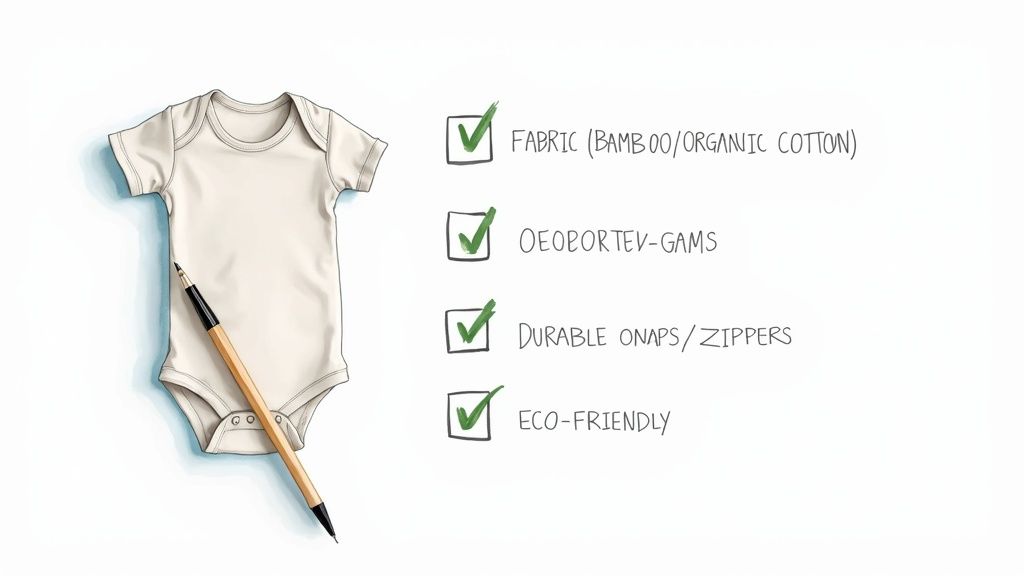
The Ultimate Quality Checklist
Run through these checkpoints before you put anything in your cart. A quick scan for these features will tell you if a garment is truly soft, safe, and built to handle everything that comes its way.
-
☐ Feel the Fabric: Is it made from something truly skin-friendly? You’re looking for bamboo viscose for that unmatched buttery softness or organic cotton for classic, breathable comfort. This is ground zero for a happy baby.
-
☐ Look for Safety Seals: Scan the tag for certifications like OEKO-TEX® STANDARD 100 or GOTS. These logos are your shortcut to knowing the clothes are free from nasty chemicals and (with GOTS) made in a way you can feel good about.
-
☐ Inspect the Construction: Don't be shy—turn the clothes inside out. The seams should be flat and smooth, not scratchy. Give them a little tug. Do they feel solid? No loose threads hanging around? Perfect.
-
☐ Check the Hardware: Test the snaps. They should click together with a satisfying, secure "snap!" If it has a zipper, does it glide without catching? Major bonus points for parent-approved designs like two-way zippers, which are a total game-changer during late-night diaper changes.
-
☐ Spot Smart Designs: Are there any thoughtful little details? Look for things like envelope necklines that make it easy to pull a onesie down over the body (hello, blowout solution!), fold-over cuffs that double as mittens, or built-in footies to keep tiny toes warm.
This isn't just a list; it’s a new way of looking at baby clothes. You're no longer just guessing—you're a pro who can spot the subtle details that separate the great from the mediocre.
To make it even easier, here’s a table you can save or reference on your phone.
Quick Quality Check for Baby Clothes
This little table summarizes the essential features to look for when you're on the hunt for top-notch baby clothes.
| Quality Checkpoint | What to Look For |
|---|---|
| Material Feel | Buttery soft bamboo viscose or breathable organic cotton. Avoid stiff, synthetic-feeling fabrics. |
| Safety Certs | An OEKO-TEX® STANDARD 100 or GOTS logo on the tag for peace of mind. |
| Stitching & Seams | Strong, flat seams with no loose threads. The inside should be as neat as the outside. |
| Snaps & Zippers | Sturdy snaps that close securely. Smooth-gliding zippers, especially two-way designs. |
| Thoughtful Features | Envelope necks, fold-over cuffs, or built-in footies that make life a little easier. |
Having this guide handy helps you focus on what really matters, ensuring every piece you buy is a winner.
A Couple More Pro-Tips
Before you go, here are two final pieces of advice that experienced parents swear by.
- When in Doubt, Size Up: Babies grow at a truly astonishing rate. If you're stuck between two sizes, always, always go with the bigger one. You’ll get so much more wear out of it, guaranteed.
- Glance at the Care Tag: High-quality fabrics like bamboo viscose deserve a little love. A quick peek at the washing instructions (think "wash cold, tumble dry low") is all it takes to keep those PJs feeling brand new for a long, long time.
Keeping these simple points in mind will help you build a baby wardrobe that’s not just cute, but also incredibly comfortable, safe, and practical.
A Few Common Questions From Parents
Alright, even after you get a handle on materials and safety checks, a few practical questions always seem to pop up. Let's be honest, navigating the world of baby clothes can feel like learning a new language.
This is where we tackle those lingering "what ifs" and "how tos." Think of it as a friendly chat to clear up any confusion so you can feel totally confident picking out the best gear for your little one.
How Many Outfits Do I Actually Need?
This is the golden question, isn't it? The truth is, you probably need less than you think, but more than you'd expect for such a tiny person. Newborns are messy—spit-up and diaper blowouts are a daily (sometimes hourly) reality.
A great rule of thumb for the first few months is to have 5-7 sleepers and 5-7 onesies on hand. This gives you a decent rotation, so you're not chained to the washing machine, but you also won't end up with a drawer full of clothes your baby outgrew before they could even wear them. For many parents, setting up a baby shower registry is a lifesaver for getting exactly what they need without the guesswork.
What's the Best Way to Wash Baby Clothes?
When you’ve invested in beautifully soft fabrics like bamboo viscose or organic cotton, you want them to stay that way. The secret is all in the wash routine. It's simpler than you think!
- Pick a Gentle, Fragrance-Free Detergent: A baby's skin is incredibly sensitive, so skip the harsh chemicals and strong perfumes.
- Stick to Cold Water: Hot water can be tough on delicate fibers. Cold water does the job perfectly while preventing shrinking and keeping colors bright.
- Tumble Dry on Low (or Hang to Dry): High heat is the enemy of fabrics like bamboo. A low-heat setting or letting them air dry is your best bet for keeping them soft and in shape.
Following these simple steps isn't just about cleaning. It's about protecting the fabric's integrity, making sure every outfit stays just as cozy as it was on day one.
How Can I Tell if a Brand's "Eco-Friendly" Claims Are Real?
"Sustainable" and "eco-friendly" are thrown around a lot these days, and it's hard to separate the real deal from clever marketing. The easiest way to cut through the noise is to look for proof from a third party.
The GOTS (Global Organic Textile Standard) certification is the gold standard here. It's not just about the fabric being organic; it means the entire process, from the farm to the final stitch, meets incredibly high environmental and social standards. Another huge clue is transparency. A truly committed brand won't hide its process—it will proudly share details about its supply chain, packaging, and values right on its website.
At Little Venture Co., we believe in creating the best quality baby clothes that are not only buttery-soft and safe but also align with your family's values. Discover our collection of faith-inspired, OEKO-TEX® certified bamboo apparel at https://littleventureco.com.